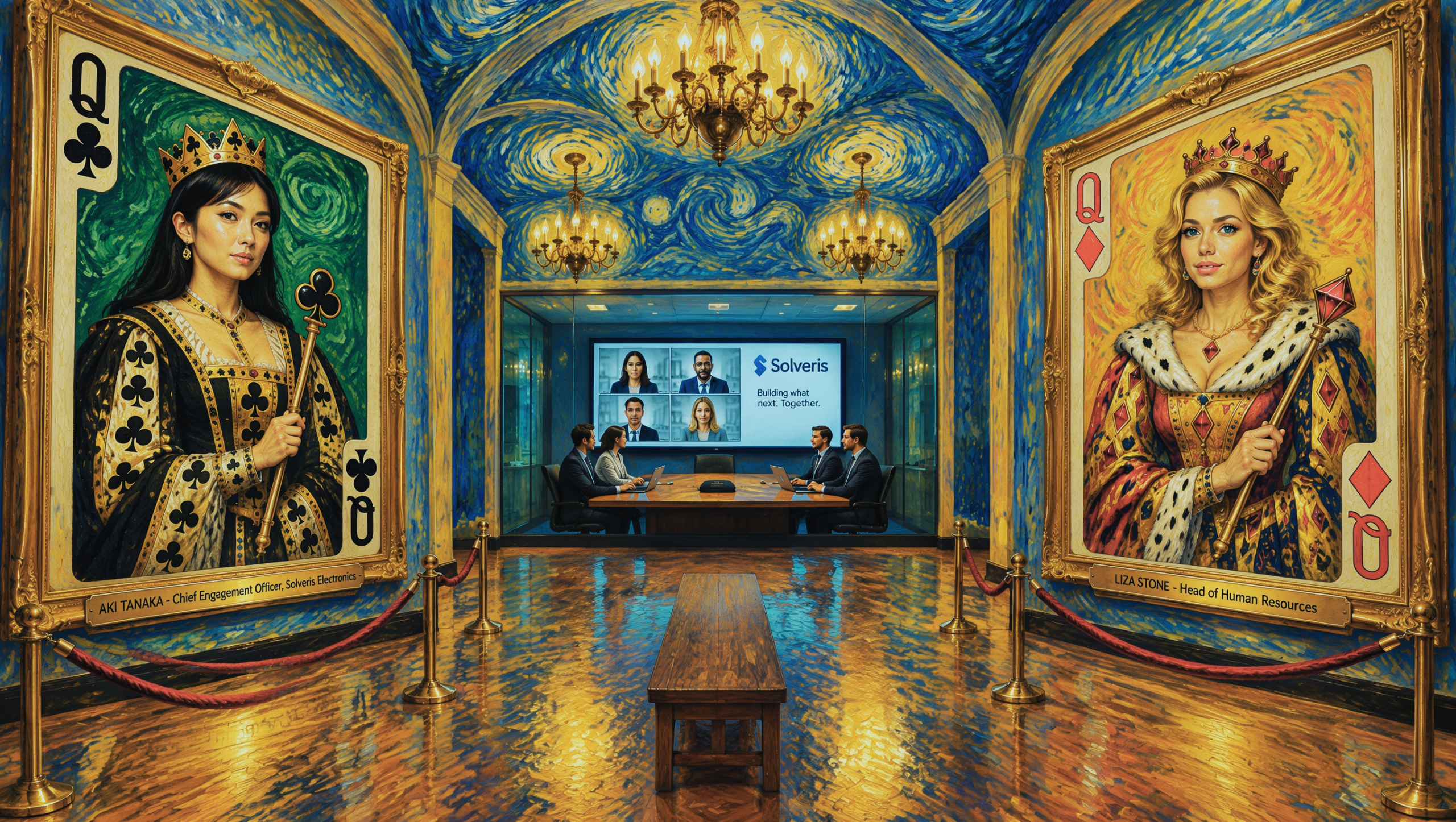
— What Is Organizational Engagement? —
Employee Engagement has become a common management and HR topic in many organizations.
Run an engagement survey. Listen to employees.
Identify issues around leadership, career, reward, work environment, purpose, and more.
Then take various actions based on the results.
Historically, HR has led many of these efforts.
At the same time, however, organizations are also reconsidering the role and function of HR itself.
One example is bringing the CIO and HRD, or CHRO, much closer together—and, in some cases, even integrating parts of their responsibilities.
This is not simply because software companies employ large numbers of IT professionals.
For an organization, both IT and HR provide essential infrastructure that enables people to work.
Technology is provided.
People are deployed.
Operations are supported.
Both functions increasingly place Business Partners, Customer Success-type roles, or other support functions close to the business to help execute at the front line.
Seen this way, IT and HR may have more in common than we often assume.
As DX and AI become more deeply embedded in business activities, and people increasingly work together with technology, it may also become more difficult to separate the question of
“How should we deploy people?”
from
“How should we deploy technology?”
In response to this broader shift, we developed a hypothesis.
If the role of HR changes significantly, the management of Engagement — something HR has traditionally owned — may eventually move to another organization or function.
That led us to consider a new C-level role:
Chief Engagement Officer — CEnO.
We began to think the CEnO could become a management function that supports the CEO alongside the CFO.
The CEO defines Strategy.
The CFO ensures financial resources circulate through the organization to enable that Strategy.
And the CEnO ensures that the organization itself remains capable of Strategy Execution.
A management Triangle built around these three roles.
In our ERR& Insight Vol.6 Supplement, published on October 19, 2025,
“CEnO as the Missing Link — Completing the Architecture of CEO Accountability,”
we introduced this idea.
There, we viewed Engagement not simply as the psychological state of individual employees, but as
a state in which the organization is ready to execute strategy.
We also suggested that Performance emerges when that Readiness is combined with what we might call organizational Momentum.
Maintaining that state continuously may be one of a CEnO’s core responsibilities.
Coincidentally, this year’s MLB National League Championship Series featured the same matchup as last year:
the Los Angeles Dodgers and the Milwaukee Brewers.
But this year produced the opposite result.
The Brewers won the series 4–0.
Of course, Organization Theory alone can’t explain baseball.
Player capability.
Pitching.
Batting.
Injuries.
Game Strategy.
Many factors matter.
But if we look at the series through two questions —
Was the organization ready to compete?
and
How much Momentum had it created?
— the Brewers’ management this year becomes particularly interesting.
At least from our perspective, the Brewers appeared better able to convert those two elements into organizational strength.
This does not mean that individual player Engagement is unimportant.
Each person needs to be motivated.
Understand their Role.
Trust the Team.
Want to win.
All of that matters.
But none of it, by itself, guarantees victory.
Perhaps there is another form of Engagement beyond Individual Engagement.
And perhaps that Engagement is an important force in helping an organization compete.
We call it Organizational Engagement.
So what is Organizational Engagement?
We first see it not as an Activity, but as a state of the organization.
People notice what needs to be done.
When necessary, they move beyond their formal Role.
They connect with others.
And they use their Capability toward the organization’s purpose.
When this happens naturally, individual capability can gradually become Organizational Capability.
We believe that Organizational Engagement is a state in which positive reactions between people and the organization can occur more easily.
It may help to distinguish this from Individual Engagement.
If Individual Engagement asks,
Do I want to contribute?
then Leadership Utility asks,
Can I contribute something useful here?
And Organizational Engagement asks,
Does the organization enable people to contribute what is actually needed?
In other words:
Individual Engagement = Willingness
Leadership Utility = Usefulness in Context
Organizational Engagement = Enablement
Having capability and having the organization use that capability are not the same thing.
A person may have Experience.
Knowledge.
Judgment.
Networks.
Leadership.
But unless those assets are used inside the organization, they don’t become Organizational Capability.
The same person may create enormous value in one environment and very little in another.
Leadership Utility, therefore, is not simply the Capability a person possesses.
It is:
the usefulness a person creates through Experience, Judgment, and Action within a particular Context.
Then what creates the Enablement that allows this Utility to emerge?
Systems?
Organizational structure?
Culture?
Corporate philosophy?
Leadership?
Perhaps all of them.
But we believe there may be another way to look at this.
Something that facilitates reactions between people, work, and the organization itself.
A kind of
Catalyst.
In chemistry, a catalyst does not create the reaction itself.
It creates conditions that make a reaction easier.
Perhaps organizations have something similar.
It does not create Capability.
But it lowers the barriers that prevent Capability from becoming Utility.
It connects people.
It gives people reasons to move.
It allows them to cross Role boundaries.
It enables Decision when Decision is needed.
That “something” might be a system.
It might be Culture.
It might be corporate Values.
Or it might exist in leaders’ words and everyday behavior.
And importantly, not all of it is necessarily articulated.
“In this company, we do not leave someone alone when they are in trouble.”
“If the customer has a problem, we cross organizational boundaries.”
“If you notice the problem first, you are allowed to move first.”
None of these may be written in a Policy or in Corporate Values.
Yet people may naturally behave that way.
Conversely, an organization may display impressive Values and Leadership Principles on the wall while those statements have almost no influence on actual behavior.
In other words,
What is articulated and what actually functions as a Catalyst are not necessarily the same thing.
We refer to the conditions that help individual Utility emerge, connect across people, and ultimately become Organizational Capability as
Organizational Catalysts.
From this perspective, the role of the CEnO also looks different.
The CEnO is not there to raise Engagement Survey scores.
Nor is the role simply to motivate employees.
The questions are different.
What is moving people?
What is stopping them?
Under what conditions does human capability become utility?
The CEnO must identify those conditions.
Articulate them where necessary.
Use them to help the organization stay continuously engaged.
That may be where the CEnO’s real value lies.
But this is not easy.
Even if a particular environment successfully creates such a state, reproducing it across the entire organization is a different challenge.
People may have moved because of a crisis.
M&A may have created an unusual situation in which otherwise invisible capabilities suddenly surfaced.
So can Leadership Utility truly be reproduced as organizational capability?
If so, what kinds of Catalysts are required?
And how can an organization discover Catalysts that haven’t even been put into words yet?
We explore these questions through the fictional case of Solveris Electronics.
At the center of the case is Solveris’ first Chief Engagement Officer:
Aki Tanaka.
The Case Part 1
TSMT PMI — Phase 2
Case
Several weeks had passed since Vision X’s official launch.
“One more thing. I’ve decided to bring HR into the PMI.”
“Understood.”
Aki Tanaka, who had become Chief Engagement Officer — CEnO — of Solveris Electronics six months earlier, was finishing her regular online one-on-one with CEO John Smith.
John reviewed the documents in front of him and added another comment.
“I spoke with Liza this morning.”
“Understood. I’ll contact her as well.”
Aki ended the meeting.
Chief Engagement Officer.
It was still far from a common title.
The person responsible for Engagement as a corporate resource — and for creating an organization capable of executing Strategy.
That was the role John had given her.
Yet at the moment, much of Aki’s time was not being spent on the new CEnO role itself.
She spent it on Vision X, the new medium-term management plan she had developed in her previous position as Director of Corporate Planning.
At the center of Vision X was the acquisition of TWK, an emerging semiconductor company, and the launch of a new company following the acquisition:
TWK–Solveris Micro Technologies (TSMT).
TSMT had been established to leverage TWK’s development technologies in Power Semiconductors and System LSIs to bring new inspection equipment to the aerospace market.
Originally, there was even a plan for Aki to lead the new company as President.
But her appointment as CEnO changed that.
Michael Jones became President of TSMT, while Aki took responsibility for the PMI directly under the CEO and led the organization from Day 1.
Business planning.
Governance.
Organization Structure.
Clarifying roles across the management teams of TWK and Solveris.
And figuring out how to merge the two organizations into one new company.
For Aki, TSMT was also Vision X’s first major experiment.
When she left the office set up for her at the former TWK site, it was shortly after 1 p.m.
Her regular meeting with TSMT President Michael was coming up next.
As she walked down the corridor, she thought again about John’s final comment.
I’ve decided to bring HR into the PMI.
Liza had probably heard about it only that morning.
I need to catch Liza.
She was probably still trying to organize her thoughts.
But Aki also had several things she wanted to discuss with her.
She had noticed a few issues during the first 100 days of TSMT.
Before speaking with Liza, she could confirm them directly with Michael.
Michael first. For Liza, his words will matter more than my interpretation.
With that in mind, Aki walked down the stairs toward the cafeteria.
The meeting with Michael that followed was brief.
His request was clear.
He wanted to speak directly with Liza about Phase 2 of the PMI.
Preferably that same day.
What he wanted from HR was equally clear:
Send experienced HRBPs to TSMT as quickly as possible.
He wanted to explain the background to Liza himself.
He already had the materials prepared.
After finishing the meeting, Aki checked the time again.
It was almost 3 p.m.
Liza was probably at lunch…
Back in her office, Aki decided to call her.
She usually didn’t call people without warning.
Unless something was urgent, she preferred to send a message first and check whether the other person was available.
But this time was different.
After several rings, Liza answered.
“Liza, sorry for calling out of nowhere. Can you talk for a minute?”
Aki sounded slightly rushed.
“Sure. I don’t have another meeting until this evening.”
Aki could hear some background noise.
“I’m in the cafeteria. I’ll call you back when I’m back at my office.”
“Okay. I’ll wait.”
That was the entire conversation.
Aki turned back to her PC and checked Liza’s and Michael’s calendars.
4:30 p.m.
Both were available.
There.
She booked a meeting room and immediately sent them a web meeting invitation.
The subject line was simple:
TSMT PMI — HR Transition
The meeting started on time.
Aki projected her PC onto the TSMT meeting room screen.
“Hi, what’s up, guys?”
Before Liza could finish her usual greeting, Michael began.
“You’ve probably already heard, but TSMT has completed the Integration Phase through Day 100. This month we enter Phase 2, and we’ll begin the full integration with the existing Solveris Organization.”
He continued.
“First, take a look at this slide.”
An overview of TSMT Phase 2 appeared on the screen.
New product development.
Integration with existing Solveris Functions.
Migration toward common Processes.
And a new Management Structure made up of people from both former TWK and Solveris.
After walking through the slide, Michael went straight to the point.
“I need several experienced HRBPs here.”
“John told me about that this morning.”
Liza answered immediately.
“I’ll have Nicholas, our HRBP Head, send you a candidate list. I don’t know exactly how many we can release yet, but given our current structure, probably two full-time. The rest would have to be shared.”
Liza came prepared.
Aki thought as she listened.
Then she looked at Michael.
He had no reason to ask for this meeting today to confirm the number of HRBPs.
Here comes the real issue.
As expected, Michael continued.
“I may be overstepping, given that I’ve only been President for a few months, but…”
He paused and pulled up another slide.
The title read:
Current Organization
A simple Organization Chart.
Underneath were short notes that looked more like Michael’s own working memos than formal presentation text.
It showed the names and Formal Roles of the key people currently supporting TSMT management.
Beside them were short observations Michael had collected over the past several months — issues that reflected the current organization and could develop into future concerns.
The TWK side was still driving technical development for the new product.
But the Utilization of Engineers sent from Solveris had not increased as expected.
Michael pointed to the screen and explained the current situation.
Liza asked two or three questions, then opened HRIS on her own PC and began checking Solveris members’ profiles.
TWK and Solveris also differed in how Engineers recognized others’ expertise.
At TWK, academic background, research institutions, specialist fields, and research achievements carried considerable weight in evaluating technical credibility.
At Solveris, trust was more likely to be built through internal Experience, previous Project results, and seniority.
Even where two people had similar Technical Backgrounds, their Capability was not necessarily recognized in the same way.
And the Solveris Engineering Team assigned to TSMT consisted largely of younger members, many of them women Engineers.
Their Capability was not the issue.
But the TWK Engineers didn’t necessarily give that capability equal weight from the beginning.
The technical capability existed.
The people existed.
Yet the two groups still weren’t functioning fully as one Team.
That was how Michael felt.
After finishing his explanation, Michael checked the time.
“Sorry, but I have to get to my next meeting.”
“No problem. I’ll get the rest from Aki.”
Liza replied.
Michael thanked them both and left the meeting room.
Now Aki began talking with Liza.
What Michael had been trying to explain.
And what Aki herself had noticed during the PMI’s first 100 days
Trying not to impose too much of her own interpretation, Aki explained each point carefully.
What she had observed during Day 100 and what Michael had been seeing as President seemed to overlap considerably.
Technical Capability existed.
People had been assigned.
Roles had been defined.
But that alone was not enough to make two Organizations move together.
Liza, meanwhile, was trying to understand the situation as quickly as possible.
She checked each employee Profile in HRIS.
Their Roles.
Their previous Assignments.
Who needed to be connected with whom.
Who needed what kind of Experience.
Where an Intervention might help this organization start moving.
Aki could almost see Liza’s thinking turning rapidly into concrete Actions.
That was one of Liza’s strengths.
Find the organizational malfunction.
Bring in the right people.
Create Training.
Change a Role.
Support the Manager.
Get the organization moving again.
Liza was unquestionably a strong HR Director.
And once again, she was thinking at full speed to find the “something” Michael was looking for.
The two talked for a long time.
Eventually, Liza began to think that Lucas — the Lead of the new product development Project — and the Experience he had accumulated could be leveraged to create the first signs of change.
A new Training program.
That was Liza’s solution.
But it would not be a conventional program designed to teach existing Leadership Competencies.
Instead, participants would work through real issues already occurring inside TSMT.
How do you move when Roles are ambiguous?
How do you work with people from very different Backgrounds?
How do you use your own Experience and Judgment for the benefit of the organization?
Aki asked her,
“What are you going to call the Training?”
Liza thought for a moment.
“Leadership Utility.”
Aki repeated the phrase silently.
Leadership Utility.
Not bad.
In fact, it seemed to capture much of what they had just been discussing.
Liza’s proposal was a positive step.
Identify a malfunction in the current organization and introduce a concrete Intervention.
Use one person’s Experience to influence others’ behavior.
As an HR Approach, it was entirely reasonable.
But Aki was left with a slightly different question.
Lucas clearly had Experience, Knowledge, and Judgment.
Could those assets be brought out effectively as Utility within the TSMT Environment?
And even if they could, would that be because Lucas happened to be the right person in the right place?
Or did the unusual environment created by M&A and PMI itself bring something to the surface that would otherwise have remained invisible?
How much change could introducing Training—a relatively Traditional HR Intervention— create in such an environment?
Aki was not really thinking about the Training itself.
She was thinking about something underneath the organization.
Not simply how to deploy Capability.
But how to create a state where Capability can move when needed, connect with others, and let the organization respond with agility.
Should Roles be defined more tightly?
Or should some flexibility remain?
Should Decision Rights be firmly fixed?
Or should people retain room to move depending on Context?
How should an organization balance stability with agility?
That was the issue Aki was struggling with as a CEnO responsible for the PMI.
If Liza, as HRD, was thinking about how to make the current organization work better again, perhaps Aki needed to think about something different:
What kind of organization allows human Capability to be converted continuously into Utility?
Technical Capability exists.
People are assigned.
Roles are defined.
And yet the Organization may still fail to move with agility.
If that is true, looking only at people is not enough.
Perhaps the organization itself contains conditions that determine whether what people possess can emerge as Utility.
Aki stopped herself there.
It was too early to reach a conclusion.
Let Liza run the Training first.
See what happens.
See who moves.
See what changes.
For now, watch.
Aki closed her PC with that thought in mind.
Part 2
CEO’s Request
Report to John
Several weeks later.
More precisely, it was during Aki’s regular one-on-one with John the week after Liza’s Training.
The meeting was almost over when John asked,
“How did Liza’s Training go?”
Reports from Liza and Michael should already have reached him.
Aki thought for a moment before answering.
“It went well… I think.”
“You think?”
John gave a slight smile and leaned forward as if examining her expression.
He often did that when an answer caught his interest.
“That doesn’t sound like you. You’re unusually hesitant.”
“The Training itself went well. In fact, I think it was a very good HR Training.”
Aki smiled slightly.
“But that’s not what’s bothering me.”
“What is?”
John now looked even more interested.
Aki reopened the PC she had almost closed and displayed the materials from TSMT’s weekly meeting on the table’s built-in screen.
“After the Training, we clearly saw changes in how members behaved in several Projects.”
John did not interrupt.
Aki continued.
TWK and Solveris Engineers had begun speaking directly with each other.
Meeting minutes had shifted from simply recording decisions to preserving the substance of important Discussions.
And most importantly, several Project Modules that had been running behind schedule were now back On Track.
Members who had previously worked quietly within the boundaries of their formal Roles were beginning, little by little, to move across those boundaries.
John listened without saying anything.
Then he spoke.
“So Liza’s Training worked?”
“At first, that’s what I thought.”
Aki answered honestly.
“You think something else is going on?”
“I’m not sure how to put it…”
John leaned forward slightly.
“You’re not sure how to put it? I could never have imagined hearing that from you back in your Corporate Planning days.”
He said it jokingly.
“Yes.”
Aki replied.
“Liza called the Theme of the Training Leadership Utility.”
“Not a bad Theme. At least, I like it.”
“I do too.”
Aki continued.
“As a Change Management Solution from HR, I don’t see anything wrong with it. But the more I thought about it, the more questions I had.”
“More questions?”
John laughed.
“You do like throwing questions at people.”
Aki smiled too.
“Is it enough just to draw out someone’s Capability as Leadership Utility?”
John was silent for a moment.
“What do you mean?”
“Take Lucas. It may have worked because someone like him happened to be there at exactly the right time.”
Aki continued.
“He has Experience. Technical Knowledge. Judgment. He can move people.”
“So he has high Utility?”
“You could look at it that way.”
Aki said.
“But if we moved the same Lucas into a different Organization, would he create the same Utility?”
John said nothing.
“Or if we put someone else with the same Capability into TSMT, would that person behave the same way?”
“Hmm… Are you saying there is another Context involved?”
“Something like Context, perhaps. I think there may be factors beyond Individual Capability.”
Aki nodded.
“Capability alone does not explain it.”
“You think the TSMT Environment is converting it into Utility?”
“There’s a very real possibility.”
Aki paused.
“But I used the word Context just now. TSMT does not yet have what I would call a fully developed Organizational Context of its own.”
“What do you mean?”
“TSMT is immediately post-M&A and right in the middle of PMI.”
Aki explained.
“Unfortunately, the Organization, individual Roles, Processes, and Decision Rights are still not fully established. In some ways, things still depend heavily on individuals. When a problem appears, someone has to move, or nothing moves forward.”
John nodded.
“So urgency itself may be moving people. The proverbial strength you find in an emergency.”
“Yes.”
Aki nodded.
“If that is the case, the Leadership Utility we are seeing may simply be something temporarily drawn out by the highly unusual conditions of PMI.”
John thought for a moment.
“I see…”
Then he closed the meeting materials in front of him.
“Could you put what you’re thinking — or perhaps what you’re trying to think through — into a two- or three-page Report?”
Aki looked at him.
“A Report?”
“I want it prepared for the next Management Meeting.”
John continued.
“Before HR rolls the TSMT Training out across Solveris.”
Aki thought for a moment.
“Yes. Understood.”
The meeting ended there.
As she left the President’s Office and walked toward the elevator hall, Aki kept thinking.
Liza’s HR approach isn’t wrong.
Look at the people.
Look at Capability.
Provide Training.
Encourage behavioral change.
And change had actually occurred.
Yet something still remained unexplained.
The source of Leadership Utility certainly begins inside people.
Experience.
Knowledge.
Judgment.
Leadership.
But whether those things become visible as Utility may not depend on the individual alone.
So what does the organization need in order to make that Utility emerge?
To prepare the two- or three-page Report John had requested, Aki would have to reconsider what had happened inside TSMT — and what was now expected of her as CEnO.
The next Management Meeting was two weeks away.
To be continued.
This is a fictional case designed to explore real organizational questions. Any resemblance to actual companies or individuals is coincidental. (Originally Posted on LinkedIn on 2026/10/30)
About Errand Consulting
Errand Consulting explores organizational transformation
through the ERR& Philosophy.
Learn more → www.hrfd3.com
なぜ企業にCEnOが必要なのか?
― Organizational Engagementとは何か ―
Employee Engagementは、いまや多くの企業で一般的な経営・人事テーマになりました。
Engagement Surveyを実施する。 社員の声を聞く。
Leadership、Career、Reward、Work Environment、Purposeなどについて課題を把握する。
そして企業は、その結果をもとにさまざまな施策を行う。
こうした取り組みの多くは、これまでHRが中心となって進めてきました。
しかしその一方で、昨今、HRの役割や機能そのものを見直そうとする動きがあることも事実です。
その一つが、CIOとHRD、あるいはCHROの役割をこれまで以上に近づけ、場合によっては統合していこうという考え方です。
これは、Software企業だから中核人材の多くがIT人材である、というような単純な話ではありません。
企業にとってITもHRも、一人ひとりの社員が仕事をするための重要なインフラです。
Technologyを提供する。
人材を配置する。
業務を支援する。
そして、それぞれの部門にBusiness PartnerやCustomer Successのようなサポート機能を置き、現場組織の戦略実行を末端で支援する。
そう考えると、ITとHRには意外なほど似た機能があります。
さらにDXやAIが企業活動の中に深く浸透し、人とTechnologyが一体となって仕事をするようになれば、
「人をどう配置するか」
と
「Technologyをどう配置するか」
を別々に考えること自体が難しくなっていくのかもしれません。
このような背景を考えれば、ITとHRの役割をより近づけることには、一定の意味があるように思います。
そして、このような世の中の大きなうねりを背景に、私たちは一つの仮説を考えました。
もしHRの役割が大きく変わるとすれば、これまでHRが担ってきたEngagementのManagementは、別の組織、あるいは別の機能が担うことになるのではないか。
そこから私たちが考えたのが、
Chief Engagement Officer――CEnO
という新しいC-Levelの役割です。
そして私たちは、このCEnOこそが、CFOと並んでCEOを支えることのできる経営機能になり得るのではないかと考えました。
CEOがStrategyを考える。
CFOが、そのStrategyを実現するために必要なFinancial Resourceを組織に巡らせる。
そしてCEnOが、組織そのものをStrategy Executionが可能な状態にする。
この三者のTriangleによる経営体制です。
私たちは2025年10月19日に発表したERR& Insight Vol.6 Supplement、
“CEnO as the Missing Link — Completing the Architecture of CEO Accountability”
の中で、この考え方を提示しました。
そこで私たちはEngagementを、単に社員一人ひとりの心理的状態としてではなく、
組織が戦略を実行する準備ができている状態
として捉えました。
そして、そのReadinessに、いわゆる「士気」――Momentumが掛け合わされることで、組織のPerformanceが生まれる。
その状態を継続的に整えていくことが、CEnOの役割ではないかと考えました。
くしくも今年、MLBのNational League Championship Seriesは、昨年と同じLos Angeles DodgersとMilwaukee Brewersの組み合わせになりました。
しかし、今年は昨年とは真逆の結果になりました。
Brewersが4勝0敗でシリーズを制したのです。
もちろん、Baseballの勝敗をOrganization Theoryだけで説明することはできません。
Playerの能力。
Pitching。
Batting。
Injury。
Game Strategy。
さまざまな要因があります。
しかし、
組織が戦う準備のできた状態にあったか。
そして、
そこにどれだけMomentumが生まれていたか。
という視点で見れば、今年のBrewersのManagementは非常に興味深いものでした。
少なくとも私たちには、今年はBrewersの方が、この二つをよりうまく組織の力へ変えていたように見えました。
もちろん、選手一人ひとりのEngagementを軽視しているわけではありません。
一人ひとりがMotivatedであること。
自分のRoleを理解していること。
TeamをTrustしていること。
勝ちたいと思っていること。
それらは当然重要です。
しかし、それだけでCompetitionに勝てるとは限りません。
そこには、Individual Engagementとは別のEngagementがあるのではないでしょうか。
そして、そのEngagementこそが、組織がCompetitionを勝ち抜くための重要な力なのではないでしょうか。
私たちは、それを Organizational Engagement と呼びたいと思います。
では、Organizational Engagementとは何なのでしょうか。
私たちはまず、それを何かのActivityではなく、組織の状態だと考えています。
人が必要なことに気づく。
必要なときには、自分のRoleを越える。
他者とつながる。
そして、自分が持っているCapabilityを組織の目的のために使う。
そのようなことが自然に起きる環境であれば、一人ひとりが持つ力は、やがてOrganizational Capabilityへと変わっていきます。
私たちは、このような人と組織の間のポジティブな反応が起きやすい状態こそが、Organizational Engagementなのではないかと考えています。
ここで、Individual Engagementとの違いを少し整理してみたいと思います。
Individual Engagementが、
Do I want to contribute?
だとすれば、
Leadership Utilityは、
Can I contribute something useful here?
という問いです。
そしてOrganizational Engagementは、
Does the organization enable people to contribute what is actually needed?
という問いです。
つまり、
Individual Engagement = Willingness
Leadership Utility = Usefulness in Context
Organizational Engagement = Enablement
です。
人がCapabilityを持っていることと、そのCapabilityが組織のために使われることは同じではありません。
Experienceがある。
Knowledgeがある。
Judgmentがある。
Networksがある。
Leadershipがある。
しかし、それらが実際の組織の中で使われなければ、Organizational Capabilityにはなりません。
同じ人でも、ある環境では大きな力を発揮し、別の環境ではほとんど力を発揮できないことがあります。
つまりLeadership Utilityとは、その人が持っている能力そのものではなく、
あるContextの中で、その人のExperience、Judgment、Actionが組織にどのような効用を生み出すか
ということになります。
では、その力をうまく引き出すEnablementは、何によって生まれるのでしょうか。
制度でしょうか。
Organization Structureでしょうか。
Cultureでしょうか。
企業理念でしょうか。
Leadershipでしょうか。
私たちは、それらをすべて含みながら、もう少し別の見方ができるのではないかと考えています。
それは、組織の中で人と人、人と仕事、そして人と組織の間に起きる反応を促進する、
触媒――Catalyst
のようなものではないでしょうか。
化学反応におけるCatalystは、反応そのものを作り出すわけではありません。
すでに存在している物質が反応しやすい条件を作ります。
組織にも、それと似たものがあるのではないでしょうか。
人が持っているCapabilityそのものを作るのではない。
しかし、そのCapabilityがUtilityとして発揮されるためのハードルを下げる。
人と人をつなぐ。
人が動く理由を作る。
Roleの境界を越えることを許す。
必要なときにDecisionを促す。
そうした何かです。
それは制度かもしれません。
Cultureかもしれません。
企業理念やValuesかもしれません。
あるいは、Leaderが日常的に発する言葉や、その振る舞いの中に存在するかもしれません。
そして重要なのは、そのすべてが言語化されているとは限らないということです。
「この会社では、困っている人を放っておかない。」
「顧客の問題であれば、部門を越えてでも動く。」
「問題に気づいた人が、最初に動いてよい。」
そのようなことがPolicyにもValuesにも書かれていなくても、人々が自然にそう行動している組織があります。
逆に、立派なValuesやLeadership Principlesが壁に掲げられていても、実際の行動にはほとんど影響していない組織もあります。
つまり、
言語化されていることと、実際にCatalystとして機能していることは同じではありません。
私たちは、組織の中で一人ひとりが持つUtilityを引き出し、それを互いにつなげ、Organizational Capabilityへ変換していく条件を、
Organizational Catalyst
と考えています。
ここまで考えると、CEnOの役割も少し違って見えてきます。
CEnOの仕事は、Engagement SurveyのScoreを上げることではない。
社員をMotivateすることだけでもない。
組織の中で、
何が人を動かしているのか。
何が人の動きを止めているのか。
どのような条件の下で、人が持つ力がUtilityとして発揮されるのか。
それを見つける。
必要なら言語化する。
そして、その条件を活かしながら、組織が継続的にEngagedな状態を作っていく。
そこにCEnOという役割の存在意義があるのかもしれません。
しかし、それは簡単なことではありません。
ある特定の環境でうまくその状態が作り出せたとしても、それを組織全体で再現できるかどうかは別の問題です。
危機だから人が動いたのかもしれない。
M&Aという特殊な状況だったから、普段は見えない力が表面に出ただけなのかもしれない。
では、そのLeadership Utilityは本当に組織の力として再現できるのでしょうか。
もしできるのであれば、そのためにはどのようなCatalystが必要なのでしょうか。
そして、その源泉となる、まだ言葉になっていないCatalystを、組織はどのように見つければよいのでしょうか。
今回はこの問いを、架空の企業 Solveris Electronics のCaseを通じて考えてみたいと思います。
その中心にいるのは、Solverisの初代Chief Engagement Officer、Aki Tanakaです。
The Case Part 1
TSMT PMI — Phase 2
Case
Vision Xの正式なスタートから数週間が経っていた。
「それと、HRにもPMIに加わってもらうことにした。」
「分かりました。」
半年前にSolveris ElectronicsのChief Engagement Officer――CEnOに就任したAki Tanakaは、CEO John Smithとの定例Online 1 on 1を、ちょうど終えようとしていた。
Johnは画面の向こうで手元の資料を確認しながら、もう一言付け加えた。
「Lizaには今朝、話をしてある。」
「分かりました。私からも連絡します。」
Akiはそう答え、ミーティングを終えた。
Chief Engagement Officer。
まだ一般的とは言えない役職名だった。
企業の経営資源としてのEngagementを統括し、組織が戦略を実行できる状態を作る責任者。
それが、JohnがAkiに与えた役割だった。
しかし現在、Akiの時間の多くを占めているのは、CEnOという新しい役割そのものではなかった。
前職の経営企画部長時代に自ら策定した新中期経営計画 Vision X。
その中核戦略として進めてきた新のは、興半導体メーカーTWKの買収と、買収後に設立した新会社 TWK–Solveris Micro Technologies――TSMT の立ち上げだった。
TSMTは、TWKが持つPower SemiconductorとSystem LSIの開発技術を活用し、航空宇宙産業向けの新しい検査機器を市場に投入することを目的に設立された会社である。
当初、Aki自身がPresidentとして立ち上げを担う構想もあった。
しかしCEnOへの就任に伴い、その役割は変更された。
TSMTのPresidentにはMichael Jonesが就任し、AkiはCEO直下のPMI責任者として、Day 1から組織の立ち上げを指揮することになった。
事業計画。
Governance。
Organization Structure。
旧TWKとSolveris双方のManagementとの役割の調整。
そして、新しい会社として二つの組織をどう一つにしていくのか。
TSMTは、AkiにとってVision Xの最初の大きな実験でもあった。
Akiが旧TWK側に設けられた自分のOfficeを出て時計を見ると、午後1時を少し回ったところだった。
このあとすぐ、TSMT PresidentのMichaelとの定例Meetingが控えている。
Akiは廊下を歩きながら、先ほどJohnが最後に言った言葉を思い返していた。
HRにもPMIに加わってもらうことにした。
Lizaは今朝、突然それを聞かされたはずだ。
Lizaを捕まえないと。
おそらく、彼女もまだ頭の中を整理しているところだろう。
しかしAkiにも、Lizaと早めに話しておきたいことがあった。
Day 100までTSMTを見てきて、少し気になっていることがいくつかある。
もちろん、そのことについてはLizaに話す前に、これからMichael本人に確認することができる。
まずはMichaelとのMeetingね。 Lizaにとっては、私からの説明より彼の言葉の方が重要だわ。
Akiはそう考えながら、Cafeteriaへ続く階段を下りていった。
その後のMichaelとのMeetingは、それほど長くは続かなかった。
彼の希望は明確だった。
PMIのPhase 2についてLizaと直接話をしたい。
できれば、その機会を今日中に作ってほしい。
HRに期待していることは、TSMTをサポートするHRBPをできるだけ早く派遣してもらうこと。
その背景については、自分からLizaに直接説明したい。
必要な資料も、すでに手元に用意してあるということだった。
AkiはMichaelとのMeetingを終えると、もう一度時計を見た。
午後3時になろうとしていた。
Lizaは多分Lunchね……。
Akiは自分のOfficeに戻ると、Lizaに電話をかけることにした。
彼女は、あまり自分から電話をするタイプではなかった。
よほど急ぐ用件でなければ、、メッセージ送り、相手の都合を確認してから電話することが多かった。
しかし今回は別だった。
数回のCallのあと、Lizaが出た。
「Liza、突然ごめんなさい。今、少し話せる?」
Akiは少し急いだ調子で言った。
「大丈夫よ。次のMeetingは夜までないわ。」
少し周囲のざわめきが聞こえた。
「今、Cafeteriaなの。Officeに戻ったらコールバックするわ。」
「分かった。待ってる。」
短い会話はそれだけで終わった。
Akiは今度はPCに向かい、LizaとMichaelのスケジュールを確認した。
午後4時30分。
二人とも空いている。
ここね。
AkiはMeeting Roomを押さえ、すぐに二人へWeb MeetingのInvitationを送った。
Subjectには短く、
TSMT PMI — HR Transition
とだけ書いた。
Meetingは定刻通りに始まった。
AkiはTSMTのMeeting Roomのスクリーンに、自分のPCの画面を投影した。
「Hi, what’s up, guys?」
画面の向こうに映るLizaのいつもの呼びかけを遮るように、Michaelが先に口を開いた。
「君も聞いていると思うが、TSMTはDay 100までのIntegration Phaseを完了した。今月からPhase 2に入り、いよいよSolverisの既存Organizationとの本格的な融合を進めることになる。」
Michaelは続けた。
「まず、このSlideを見てほしい。」
スクリーンにTSMTのPhase 2の概要が映し出された。
新製品開発。
Solverisの既存FunctionとのIntegration。
共通プロセスへの移行。
そして、旧TWKとSolveris双方から構成される新しいManagement Structure。
MichaelはSlideを一通り説明すると、単刀直入にLizaに言った。
「経験のあるHRBPを何人か、こちらに入れてほしい。」
「その話は今朝Johnからも聞いているわ。」
Lizaは間髪を入れずに答えた。
「HRBP HeadのNicholasから候補者リストを送らせる。何人出せるかはまだ分からないけれど、今の体制ならFull-timeで2名。あとは兼務になると思う。」
Lizaも準備してきている。
Akiは傍らで二人の会話を聞きながらそう思った。
そしてMichaelの表情を見た。
おそらく、HRBPの人数を確認するためだけに、このMeetingを今日中に設定してほしいと言ったわけではない。
ここからが本題ね。
案の定、Michaelが言葉を続けた。
「まだPresidentになって数か月しか経っていない私が、君にこんなことを言うのは僭越かもしれないが……。」
Michaelは少し間を置き、もう一枚のSlideを画面に映した。
Titleには、
Current Organization
とだけ書かれていた。
簡単なOrganization Chart。
その下には、Michael自身が備忘録として書き込んだような短いMメモ並んでいた。
そこには、現在TSMTの経営を支えている主要メンバーの氏名とFormal Roleが記されていた。
そしてその横には、Michaelがこの数か月で感じてきた組織の現状と、将来的な懸念につながる事項が箇条書きで示されていた。
新製品開発に向けた技術開発は、現在のところTWK側が主導している。
しかし、Solverisから派遣されたEngineersのUtilizationは、期待したほど上がっていない。
Michaelは画面を指しながら現在の状況を説明した。
Lizaはその説明を聞きながら二、三の質問をすると、今度は自分のPCでHRISにアクセスし、Solveris側のMember Profileを確認し始めた。
TWKとSolverisでは、Engineerとして相手のExpertiseを認めるときの感覚にも違いがある。
TWKでは、大学や研究機関でのBackground、専門領域、研究実績といったものが、技術者としての評価に比較的強く影響する。
一方、Solverisでは、社内で積み上げてきたExperienceや過去のProjectでの実績、年次を通じて信頼が形成される傾向が強い。
同じ水準のTechnical Backgroundを持っていても、Capabilityが相手から同じように認識されるとは限らない。
しかもSolverisから派遣されたEngineering Teamには比較的若いMemberが多く、その多くを女性Engineersが占めていた。
決して彼らのCapabilityが足りないわけではない。
しかし、それがTWK側のEngineersから、最初から同じ重さで受け止められているわけでもない。
技術力はある。
人もいる。
それでも二つのGroupは、まだ一つのTeamとして十分には動いていない。
Michaelが感じていたのは、そういうことだった。
一通りの説明を終えると、Michaelは時計を確認した。
「悪いが、次のMeetingに行かなければならない。」
「大丈夫よ。あとはAkiから聞くわ。」
Lizaが答えた。
Michaelは二人に礼を言い、Meeting Roomを出ていった。
今度はAkiがLizaと話を始めた。
Michaelが伝えたかったこと。
そして、Aki自身がDay 100までのPMIの中で気づいていたこと。
できるだけ自分の解釈を加えすぎないようにしながら、Akiは一つずつLizaに説明した。
自分がDay 100まで見てきたものと、MichaelがPresidentとして見ていたもの。
どうやら、かなり重なっている。
Technical Capabilityは存在する。
人も配置されている。
Roleも定義されている。
しかし、それだけでは二つのOrganizationが一緒に動き始めるわけではない。
一方、Lizaもできるだけ早く状況を理解しようとしていた。
HRISで社員一人ひとりのProfileを見る。
Roleを見る。
過去のAssignmentを見る。
誰と誰をつなげればよいのか。
誰に何を経験させるべきなのか。
どこにInterventionを入れれば、この組織は動き始めるのか。
Akiは、Lizaの思考が次々に具体的なActionへ落ちていくのを感じていた。
それがLizaの強さだった。
組織のどこかに不具合があれば、それを見つける。
必要な人を入れる。
Trainingを作る。
Roleを変える。
Managerを支援する。
組織をもう一度動かす。
Lizaは間違いなく優秀なHR Directorだった。
そして今回も、Michaelが探している「何か」を見つけるために、頭をフル回転させていた。
二人は長い時間話し合った。
そしてLizaは、新製品開発ProjectのLeadを務めるLucasと、彼がこれまで積み上げてきたExperienceをLeveragingすることで、変化の兆しを作ることができるのではないかと考えた。
新しいTraining。
Lizaが最後に導き出した解決策はそれだった。
ただし、既存のLeadership Competencyを教えるTrainingではない。
TSMTで実際に起きている問題を題材にしながら、Member自身に考えさせる。
Roleが曖昧なときにどう動くのか。
異なるBackgroundを持つ人と、どう仕事を進めるのか。
自分が持っているExperienceやJudgmentを、どう組織のために使うのか。
AkiはLizaに聞いた。
「そのTrainingのThemeは何にするの?」
Lizaは少し考えてから答えた。
「Leadership Utility。」
Akiは、その言葉を頭の中でもう一度繰り返した。
Leadership Utility。
悪くない。
むしろ、今二人が話していたことをよく表しているように思えた。
Lizaの提案は前向きな一歩だった。
目の前で起きている組織の不具合に対して、具体的なInterventionを入れる。
そして、人が持っているExperienceを別の人たちの行動変化につなげる。
HRとしては、非常に合理的なApproachだった。
しかしAkiには、少し違う疑問が残った。
Lucasには、確かにExperienceもKnowledgeもJudgmentもある。
それらをTSMTというEnvironmentの中で、Utilityとしてうまく発揮させることはできるのだろうか。
そして、それがうまくいったとしても、それはLucasという特定の人材がそこにいたからなのだろうか。
あるいは、M&AやPMIという特殊な状況が、普段は表に出にくい何かを引き出しているのだろうか。
Trainingという比較的TraditionalなHR Interventionを入れることで、そこにどこまで変化を起こせるのか。
Akiが考えているのは、Trainingそのものではなかった。
もっと組織の下にあるものだった。
人のCapabilityをどう配置するかだけではない。
そのCapabilityが必要なときに動き、他者とつながり、組織として機動的に反応できる状態を、どう作るのか。
Roleを細かく定義すればよいのか。
それとも、ある程度の自由度を持たせた方がよいのか。
Decision Rightsを強く固定するのか。
あるいは、Contextによって動ける余白を残すのか。
組織としての安定性と機動性を、どう両立するのか。
PMIを担うCEnOとしてAkiが悩んでいるのは、そこだった。
LizaがHRDとして、今ある組織をもう一度うまく動かす方法を考えているとすれば、Akiが考えなければならないのは、
そもそもどのような組織なら、人が持っているCapabilityを継続的にUtilityへ変えることができるのか
ということなのかもしれない。
Technical Capabilityは存在する。
人も配置されている。
Roleも定義されている。
それでも、Organizationが機動的に動けるとは限らない。
もしそうなら、人だけを見るのでは足りない。
人が持っているものをUtilityとして発揮させる条件が、組織の側にもあるのではないか。
Akiはそこまで考えて、いったん思考を止めた。
まだ答えを出す段階ではない。
LizaのTrainingを実際にやってみればいい。
何が起きるのか。
誰が動くのか。
そして、何が変わるのか。
とにかく、見てみよう。
AkiはPCを閉じながら、そう考えていた。
Part 2
CEO’s Request
Johnへの報告
それから数週間後。
正確には、LizaのTrainingが行われた翌週の定例1 on 1だった。
Meetingも終わりかけたころ、JohnがAkiに訊いた。
「LizaのTrainingはどうだった?」
LizaとMichaelからは、すでにレポートが上がっているはずだった。
Akiは少し考えてから答えた。
「うまくいった……と思います。」
「思います?」
Johnが少し笑みを浮かべながら、Akiの顔を覗き込むように見た。
興味をそそられる答えが返ってきたときの、彼のいつもの反応だった。
「君らしくないな。ずいぶん歯切れが悪い。」
「Training自体はうまくいきました。実際、良いHR Trainingだったと思います。」
Akiも少し笑った。
「でも、私が気になっているのはそこではありません。」
「というと?」
Johnはさらに興味を引かれたようだった。
Akiは閉じかけていたPCをもう一度開き、TSMTの週次Meetingの資料をテーブルに備え付けられたディスプレイに表示した。
「Trainingのあと、いくつかのProjectで明らかにMメンバー動きが変わりました。」
Johnは何も訊かなかった。
Akiは続けた。
TWKとSolverisのエンジニアが直接話すようになったこと。
Meetingの議事録が、単なる決定事項の通達から、重要なDiscussionの経緯を残すものへ変わったこと。
そして何より、それまで遅れ気味だったProjectが、いくつかのModuleでOn Trackに戻ったこと。
それまで自分のRoleの範囲で粛々と仕事をしていたMemberたちが、少しずつ境界を越えて動き始めたこと。
黙って聞いていたJohnが口を開いた。
「LizaのTrainingの効果が出た……ということか?」
「最初は私もそう思いました。」
Akiは率直に答えた。
「何か違うとでも?」
「うまくは言えないのですが……。」
Johnが少し身を乗り出した。
「うまく言えない、か。経営企画時代の君からは想像もできない答えだ。」
少し冗談めかした言い方だった。
「はい。」
Akiは答えた。
「Lizaは、このTrainingのThemeをLeadership Utilityと呼びました。」
「悪くないThemeだね。少なくとも私はそう思う。」
「私もそう思います。」
Akiは続けた。
「HRが考えるChange ManagementのSolutionとしては、まったく問題ありません。ただ、考えているうちに少し疑問が出てきました。」
「また疑問か?」
Johnが笑った。
「君はよく人に疑問を投げかける。」
Akiも少し笑った。
「人が持っているCapabilityをLeadership Utilityとして引き出す。それだけで十分なのか……と。」
Johnはしばらく黙っていた。
「どういう意味だ?」
「例えばLucasです。彼のような人材が、都合よくそこにいるからできたとも考えられます。」
Akiは答えた。
「彼にはExperienceがあります。Technical Knowledgeもある。Judgmentもある。人を動かす力もある。」
「だからUtilityが高い?」
「そう考えることもできます。」
Akiは言った。
「ただ、同じLucasを別のOrganizationに置いても、同じUtilityを発揮するでしょうか。」
Johnは何も言わなかった。
「あるいは、同じCapabilityを持っている別の人が、TSMTでは同じように動けるでしょうか。」
「ふむ……何か別のContextの問題だ、と言いたいのか?」
「例えばContextのような……。おそらく、Individual Capability以外にも何か要因があるのではないかと。」
Akiはうなずいた。
「人が持っているCapabilityだけでは説明できない。」
「TSMTというEnvironmentが、それをUtilityに変えていると?」
「その可能性は十分にあります。」
Akiは少し間を置いた。
「ただ、先ほどContextという言葉を使いましたが、TSMTにはまだ固有のOrganizational Contextと呼べるものが十分に形成されていません。」
「どういうことだ?」
「TSMTはM&Aの直後で、PMIの真っただ中です。」
Akiは言った。
「残念ながらTSMTでは、OrganizationもIndividualのRoleも、ProcessもDecision Rightsも、まだ完全には固まっていない。ある意味、非常に属人的です。問題が起きれば、誰かが動かなければ前に進まない。」
Johnがうなずいた。
「危機感が人を動かしている可能性があると……。火事場の何とか、というやつか。」
「はい。」
Akiも頷いた。
「もしそうなら、今見えているLeadership Utilityは、PMIという極めて特殊な状況が一時的に引き出しているだけかもしれません。」
Johnは少し考えた。
「なるほど……。」
そして、手元のMeeting資料を閉じて言った。
「今、君が考えていること。あるいは、これから考えようとしていることを、2、3ページのReportにしてくれないか。」
AkiはJohnを見た。
「Reportですか?」
「今度のManagement Meetingまでに準備してほしい。」
Johnは続けた。
「HRがTSMTのTrainingをSolveris全体に展開する前にね。」
Akiは少し考えてから答えた。
「はい、了解しました。」
Meetingは、そこで終わった。
社長室を出てエレベーターホールへ向かう途中、Akiは考えていた。
LizaのHRとしてのApproachは間違っていない。
人を見る。
Capabilityを見る。
Trainingを行う。
行動変化を促す。
それで実際に変化も起きた。
それでも、まだ何かが残っている。
Leadership Utilityの源泉は、確かに人の内側にある。
Experience。
Knowledge。
Judgment。
Leadership。
しかし、それらがUtilityとして顕在化するかどうかは、人だけでは決まらないのかもしれない。
では、それを顕在化させるために、組織の側には何が必要なのだろう。
Johnから託された2、3ページのReportを書くために、AkiはTSMTで起きたこと、そしてCEnOとして自分に何が求められているのかを、もう一度整理する必要があった。
次のManagement Meetingは、2週間後だった。
To be continued.
This is a fictional case designed to explore real organizational questions. Any resemblance to actual companies or individuals is coincidental. (Originally Posted on LinkedIn on 2026/10/30)
About Errand Consulting
Errand Consulting explores organizational transformation
through the ERR& Philosophy.
Learn more → www.jp.hrfd3.com


コメント