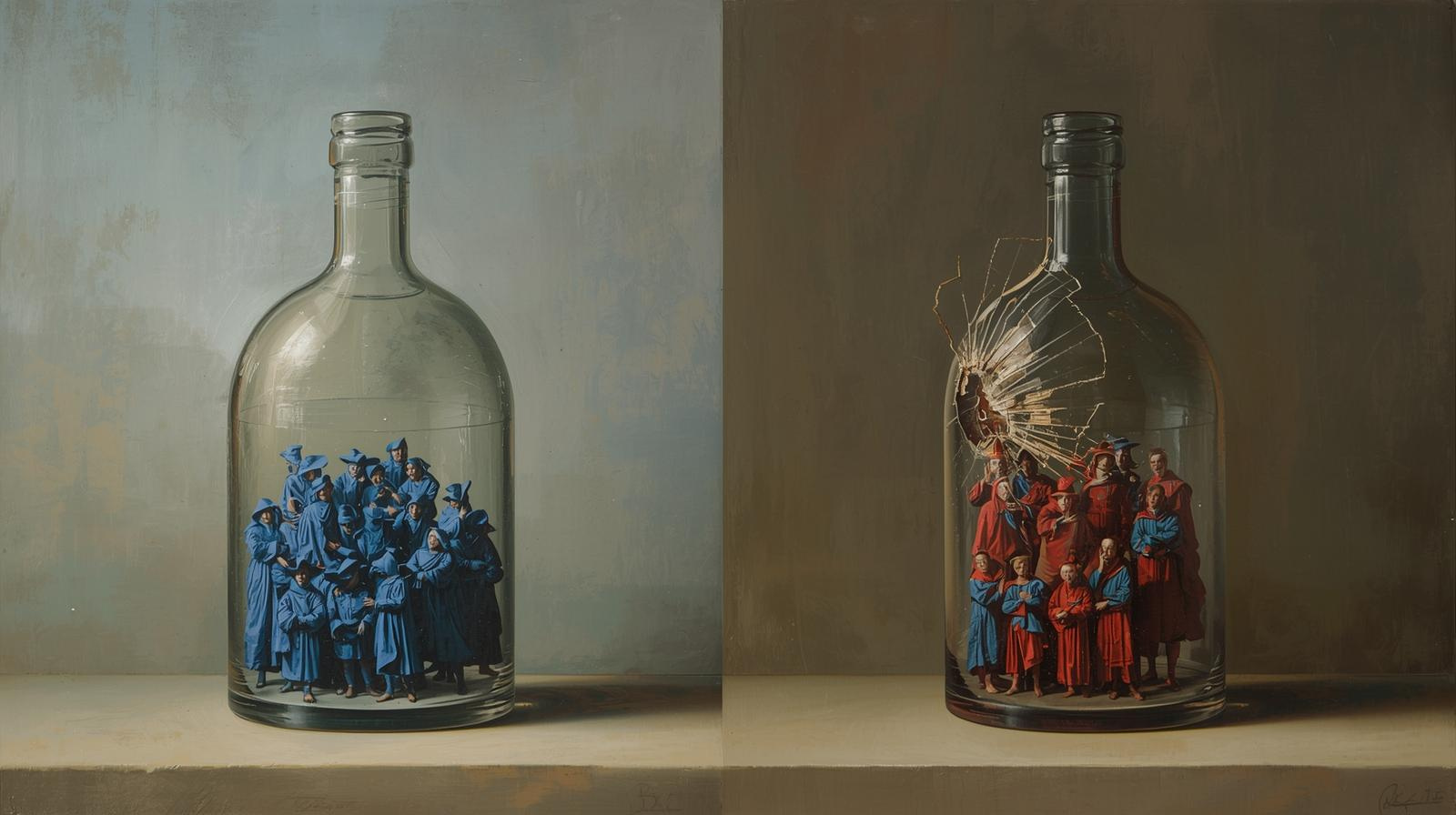
People Bias may sound unfamiliar, but it exists whenever things in an organization are decided “somehow,” without clear reasoning, and no one questions the outcome. Behind such situations, People Bias is always at work.
It is the toxin that emerges when past successes are distorted into rigid rules, or when decisions are made through majority rule without conviction or principle. It creeps in silently, damages brands, and corrodes organizations. Whenever once-great companies decline, People Bias is always part of the story.
It is not defined in handbooks or policies, yet it influences decisions. It hides behind words like tradition, common sense, or culture. Left unchecked, it erodes brands, destroys trust, and eventually kills the organization itself.
The dangers of People Bias
- Clinging to past successes: “We’ve always done it this way.”
- The tyranny of the majority: “Everyone agrees, so it must be right.”
- Dependence on authority: “If the boss says so, it must be correct.”
- The silencing of “air” that erases minority voices.
Healthy Cultural Norms unify and empower organizations. But People’s Bias disguises itself as Norm, while in reality distorting judgment. That is why it becomes a silent killer.
Learning from examples
Enron is a well-known case. The People’s Bias of “We are an innovative company” pervaded the organization, feeding a false image that eventually collapsed overnight.
By contrast, IBM in the 1990s was in deep decline, but an extraordinary leader, Lou Gerstner, confronted entrenched Bias, shattered old assumptions, and rebuilt Cultural Norms on new values. This enabled IBM to recover and reinvent its brand.
How can organizations respond?
People’s Bias cannot be eliminated. But it can be recognized, controlled, and at times removed — transforming it into a driver of renewal.
1. Strong leadership
The ability to point at Bias and declare, “This is not our Norm.” The courage to stand against the “air” that everyone else obeys. Gerstner at IBM exemplified this.
2. The role of AI
Not every company can bring in a powerful external leader. But today we have AI.
AI can review if decisions deviate from regulations or board agreements, uncover risks humans might overlook, record decisions and outcomes, and report them to governance bodies. Here, AI is not a judge — it is a mirror that reflects Bias, a mechanism of transparency.
3. Human-Centric Cultural Norms
Ultimately, what prevents Bias is Cultural Norms. They are not slogans, but the explicit articulation of what the organization values, how it decided, and how employees act every day.
- External approach (brand value): Define the promises made to customers and society, and embed them in behavior.
- Internal approach (technical strength): Ensure engineers and professionals understand how their expertise connects to social value, and realign business activities accordingly.
Conclusion
Future business leaders must understand the destructive influence of People Bias, implement AI to maintain transparency in decision-making, and embed “human-centric” Cultural Norms to protect their organizations.
This is not just about avoiding crises. It is about creating new value. Soon, we may witness a fusion of digital-centric (AI-enabled decision-making) and human-centric (Bias-free Cultural Norms) into a new model of organizational value creation. (Originally posted on LinkedIn on 2015-09-13)
Bias is the silent killer. Norm is the soil where brands grow strong.
About Errand Consulting
Errand Consulting explores organizational transformation
through the ERR& Philosophy.
Learn more → www.hrfd3.com
What is People Bias?
サイレントキラーはすべての組織を蝕む
People Bias(ピープル・バイアス)。 聞きなれない言葉かもしれませんが、組織の中で「なんとなく物事が決まってしまい、誰も疑問を持たず、その結果を受け入れてしまう」状況の背後には、必ずこのPeople Biasが潜んでいます。
People Biasは、過去の成功体験がゆがんだ形で定着したり、信念のない多数決文化から生まれる「毒素」です。 音もなく忍び込み、ブランドを蝕み、組織を腐らせていきます。 かつて隆盛を誇った企業が衰退するとき、その影には必ずPeople Biasが存在しています。
就業規則やマニュアルに書かれていなくても、意思決定に影響します。 「伝統」「常識」「文化」といった言葉の裏に隠れ、組織を侵食していきます。 放置すれば、ブランドは毀損し、信頼は失われ、やがては組織そのものが死に至ります。
People Biasの危険性
- 「これまでこうしてきたから大丈夫」という成功体験への固執
- 「みんなが賛成だから正しい」という多数決の呪縛
- 「上が言うのだから間違いない」という権威への依存
- 少数意見がかき消される“空気”
健全な Cultural Norm(文化規範) は組織をまとめ、力を与えます。 しかしPeople BiasはNormを装い、実際には判断をゆがめます。 だからこそ「静かなる殺し屋=サイレントキラー」なのです。
事例から学ぶ
エンロン事件はその典型です。 「私たちは革新的企業だ」というPeople Biasが組織全体にはびこり、その虚像を粉飾し続けた結果、ブランドは一夜にして崩壊しました。
一方、1990年代の不振に苦しんだIBMは、外部から招かれた稀代のリーダー ルー・ガースナーが旧来のBiasを打破し、新しい価値観に基づくCultural Normを構築しました。 その結果、IBMは危機を乗り越え、ブランド再生を果たしたのです。
組織はどう対応すべきか
People Biasを完全に消すことはできません。 しかし、認識し、制御し、ときに排除することで、危機を突破するドライバーに変えることができます。
1. 強いリーダーシップ
Biasを見抜き、「これは私たちのNormではない」と明言する力。 誰もが従ってしまう“空気”に立ち向かう勇気。 IBMのガースナーはその象徴です。
2. AIの活用
すべての企業が強力なリーダーを外部から迎えられるわけではありません。 しかし今はAIがあります。
AIは意思決定が規定や合意事項から逸脱していないかを照合し、人間が見落とすリスクを洗い出し、意思決定と結果を記録・検証し、監査委員会にフィードバックすることができます。 ここでのAIは判断者ではなく、**「Biasを映す鏡」「透明性の装置」**なのです。
3. Human-CentricなCultural Normの再定義と共有
最終的にBiasを防ぐのはCultural Normです。 Normは単なるスローガンではなく、組織が何を大切にし、どのように意思決定し、社員がどう行動するかを明文化し、日常に浸透させるものです。
- 外的アプローチ(ブランド価値の保護):顧客や社会に対して約束する価値を明示し、それを日々の行動に落とし込む。
- 内的アプローチ(技術力の活用):技術者や専門人材が、自らの力をどのように社会価値に結びつけるかを共有し、それに基づいて事業活動を再構築する。
結論
これからのビジネスリーダーは、People Biasの破壊的な影響を正しく理解し、AIを活用して意思決定の透明性を高め、Human-CentricなCultural Normを定着させなければなりません。
それは単なる危機回避ではなく、新しい価値を生み出す道です。 近い将来、私たちは Digital Centric(AIによる意思決定) と Human Centric(Biasを排除したNormの再構築) が融合し、新たな企業価値創造モデルが生まれる瞬間を目にするでしょう。
Biasはサイレントキラー。 Normはブランドを育てる土壌です。
About Errand Consulting
Errand Consulting explores organizational transformation
through the ERR& Philosophy.
Learn more → www.hrfd3.com
コメント