In this third installment of the series, “Who in HR Looks at the Organization?”, I would like to focus on onboarding.
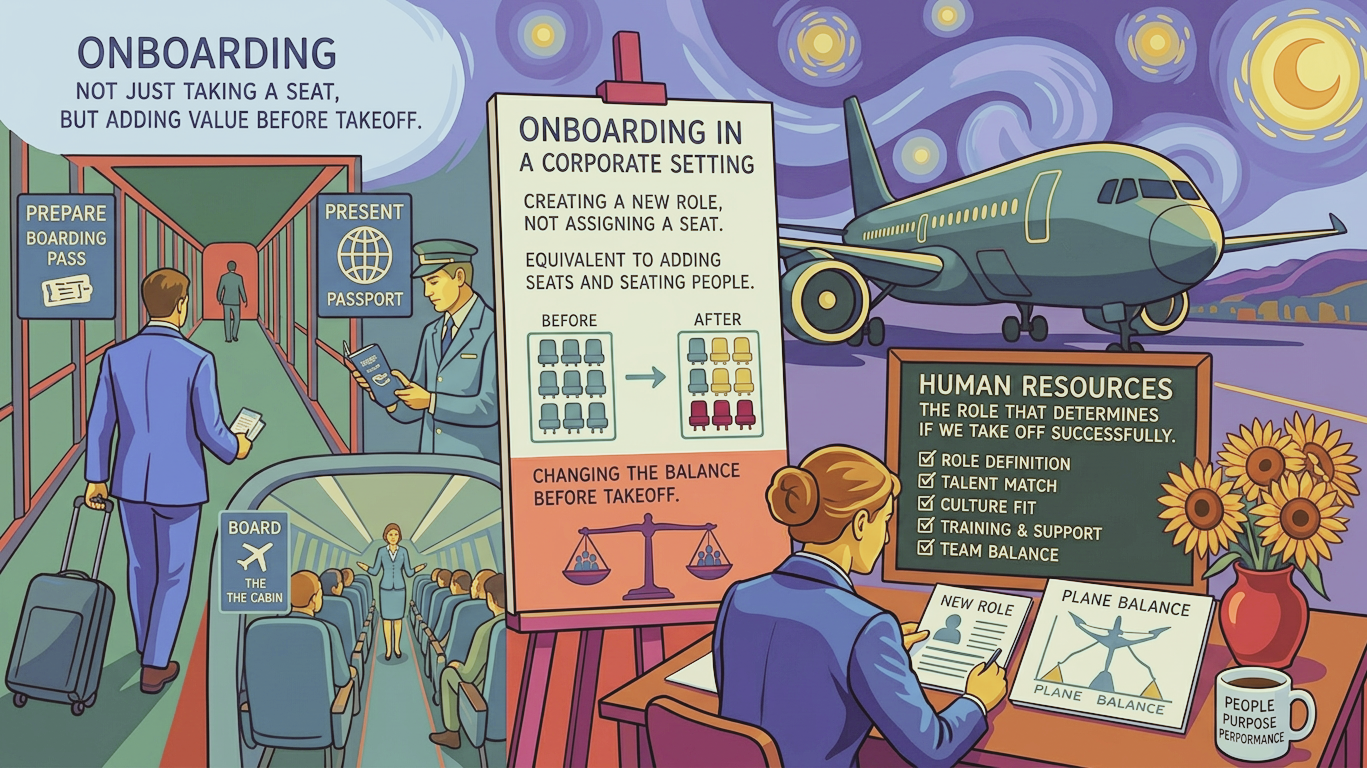
The word onboarding literally means getting on board. Today, we often see the word in airports as a sign for boarding an aircraft.
In companies, however, onboarding is often used to describe preparation programs for newly hired employees.
Employment procedures. Company orientation. IT account setup. Compliance training. Explanation of HR policies. Initial meeting with the manager.
In addition to these HR-provided programs, business units often provide their own onboarding support.
Introduction to team members. Explanation of work responsibilities. Guidance on documents, tools, and systems needed for the role. Setting up business calendars, including reporting cycles. Connecting the new employee with meetings and key stakeholders.
All of these are necessary and important.
However, if we understand onboarding only as an entry program, we may miss its real meaning.
Onboarding is not simply about helping a new employee get used to the company.
When a person joins an organization, a new member is added. At the same time, a new organizational function is added.
In this sense, onboarding is a change point where the connection between a person and the organization is altered.
A new person joins. Someone transfers into a new team. Someone is promoted into a new role. A reporting line changes due to organizational restructuring. Someone joins a new project. A dual role begins. An external professional or contractor joins the team.
These are not simply movements of people.
They are changes in the connection between people and the organization.
And this change does not affect only the person involved.
The manager’s role changes. Colleagues change how they work. Upstream and downstream connections change. The flow of information changes. The people involved in decision-making change. Development opportunities for junior members may change. Expectations and role boundaries among existing members may also change.
In other words, onboarding is not individual adaptation.
It is the redesign of organizational connection.
The direct responsibility for managing this change usually belongs to the hiring manager.
However, what becomes important here is the role of the leadership layer below senior leaders.
By the leadership layer, I do not mean the charisma of top leaders or the personal qualities of individual leaders.
I mean the people who are entrusted by senior leaders with the practical operation of the organization.
They translate the intentions of executives or department heads into the field. They move multiple teams or frontline organizations. They make organizational operations work in practice.
This is close to what we often call middle managers. But here, I would like to define it not as a job title, but as a role that manages organizational change points in the field.
This leadership layer functions like the autonomic nervous system or hormones of a living organization.
When a new person joins an organization, the organization needs a kind of break-in period.
This period should not be seen merely as the individual’s ramp-up period.
It should be understood as a transition period for the organization itself, requiring careful adjustment and steering.
Sensing change. Communicating it to the field. Observing reactions. Adjusting when necessary. Correcting misalignments in roles and relationships. Increasing tension where needed and easing tension where necessary.
As long as an organization is alive, change will always occur.
The problem is not change itself.
The problem is when change points are left unmanaged in the field.
In Strategic HR at global companies, it is not unusual to add people to an organization outside the original plan.
However, creating change points in an organization without careful consideration does not always produce good results.
Adding one person is not simply adding one more seat.
Where will this person be connected? What role will this person play? Whose way of working will change? Which upstream and downstream processes will be affected? Which decisions will this person be involved in?
If these questions are not shared, the organization may have added a new function, but that function may not fully work.
Even if one person is added, if the organization does not understand how to use that person, who needs to change their behavior, and where the person is expected to contribute to outcomes, results will depend on the individual effort of the new employee or the hiring manager.
This is where the real difficulty of onboarding lies.
Simply put, enabling a new member to become productive is part of the hiring manager’s basic responsibility for organizational management.
Understanding the work. Setting short-term goals. Providing daily feedback. Connecting the person with team members. Involving the person in key meetings. Explaining role expectations.
These are responsibilities that the hiring manager should first take ownership of.
However, there are connections that only the hiring manager may be able to see.
Especially when the hiring manager is one layer below the leadership layer, the hiring manager may be able to support the individual’s adaptation to the work, but may not be able to see how the person’s entry affects the broader organizational connections.
Connection with upper-level priorities. Relationships with other departments. Role allocation across upstream and downstream processes. Decision rights. Role changes among existing members. Future development lines. Organizational risks.
These are not always easy for the hiring manager alone to judge.
To use a train analogy, the hiring manager may see the seating arrangement inside the carriage.
But the hiring manager may not see the operation of the entire train, the position of the carriage, the speed, or the impact on the carriages before and after it.
That is why collaboration between the leadership layer above the hiring manager and HRBP becomes necessary.
As discussed in #1 of this series, HRBP often understands the new “function” being added to the organization through job descriptions and organization charts.
However, HRBP is not always involved in the final decision about the person who will carry that function.
At this stage, HRBP does not exist to take over the hiring manager’s responsibility.
HRBP supports the hiring manager and helps manage the break-in period from an organizational connection perspective.
The level of HRBP involvement varies by organization.
“Why do we need HRBP support after approving the budget and hiring the person?
Shouldn’t the hiring manager be able to ramp up the new member independently?
If not, how will the manager develop organizational management capability?”
This view has some logic.
Hiring managers should not be overprotected.
Enabling a new member to become productive is a basic managerial responsibility.
However, from the perspective of Strategic HR, the question is not only “Whose responsibility is it?”
Once the budget is approved, the hire is no longer just headcount replacement.
It is an allocation of management resources.
Therefore, the real question is how quickly that human capital investment can be converted into organizational outcomes.
The hiring is approved. The person joins. But roles, authority, upstream and downstream processes, information flow, surrounding behaviors, and the expected organizational state after 90 days are not prepared.
In such a situation, the human capital investment will not ramp up properly.
Onboarding is not a post-entry procedure.
It is change-point management for converting approved human capital investments into organizational outcomes.
This point is also connected to the question discussed in ERR& Insight Reprise #2, “Strategic HR Is Not HR Strategy.”
Strategic HR is not simply about designing HR programs.
It is about creating a condition in which the organization can execute strategy through people, roles, the leadership layer, and operations.
From this perspective, onboarding is not a small HR process.
It is an important change point where the organization and the person are reconnected, and where human capital investment is converted into organizational outcomes.
So, who should look at what?
We can organize the roles as follows.
The hiring manager looks at the individual’s daily ramp-up. The leadership layer examines changes in the broader organizational context. HRBP assesses whether those connection changes pose organizational risks.
HRBP cannot directly manage every onboarding case.
Especially in global companies, HRBPs often cover a very large population.
It is not realistic for HRBP to individually support every transfer, promotion, role change, or project assignment.
That is why HRBP’s role is not to cover everything.
What HRBP should look at is which onboarding cases involve organizational connection risks.
This is where the heat map becomes useful.
An external hire joins a key position. A new manager takes over a team. People move at the same time as a major organizational change. Knowledge continuity is disrupted by the departure or transfer of a predecessor. The roles of surrounding members change significantly. Upstream or downstream processes, or decision-making structures, change. The job description or expectations remain ambiguous at the time of hiring. The same position has experienced early turnover or misfit in the past.
In these cases, HRBP involvement is not about overprotecting the hiring manager.
It is about complementing the organization so that organizational connection risks are not overlooked.
HRBP does not replace the leadership layer.
Through relationships with the leadership layer, the HRBP complements how the organization is viewed.
And when necessary, HRBP connects the issue to HR functions such as recruiting, learning and development, compensation, placement, employee relations, talent management, and organizational development.
The leadership layer moves the connection in the field. HRBP supports that connection so that it functions. HR functions provide the necessary mechanisms and resources.
Without this collaboration, onboarding depends too much on the individual effort of the new employee and the personal skill of the hiring manager.
Failure in onboarding does not simply mean that the person did not get used to the company.
It means that the connection between the person and the organization was not properly designed, and the expected function did not emerge.
Conversely, successful onboarding does not simply mean that the person adapted quickly.
It means that, through that person’s entry, organizational connections are adjusted, surrounding behaviors change, and expected outcomes begin to emerge.
When one person moves, organizational connections also move.
That change affects not only the individual, but also the manager, colleagues, upstream and downstream processes, decision-making, and development lines.
Therefore, onboarding is not individual adaptation.
It is the redesign of organizational connection.
And managing that change point in the field is the role expected of the leadership layer, while the HRBP supports it from an organizational perspective and through HR functions.
Who in HR looks at the organization?
This question cannot be avoided in onboarding.
At the change point called onboarding, the HRBP should not look only at the organization’s box.
HRBP must also look at the quality of the leadership layer that makes those connections work in the field.(Originally posted on LinkedIn on 2026-07-20)
About Errand Consulting
Errand Consulting explores organizational transformation
through the ERR& Philosophy.
Learn more → www.hrfd3.com
ERR& Tips: Who in HR Looks at the Organization? #3
オンボーディングの機能とは…
「人事の中で、誰が組織を見ているのか」を考えるシリーズの第三回では、オンボーディングに注目したい。
オンボーディングという言葉は、文字通り「乗船する」という意味を持つ。最近では、旅客機の搭乗を示すサインとして目にすることも多い。
企業の中では、多くの場合、新しく入社した人に対する準備プログラムの意味で使われる。
入社手続き。 会社説明。 ITアカウントの設定。 コンプライアンス研修。 人事制度の説明。 上司との初回面談。
人事部門が提供するこれらのプログラムに加えて、部門側で提供されるものもある。
組織メンバーの紹介。 業務内容の説明。 業務を進めるうえで必要な資料やツールの使い方。 レポーティングを含む業務カレンダーの設定。 会議体や関係者との接続。
もちろん、これらはすべて不可欠であり、重要である。
しかし、オンボーディングを入社時プログラムだけで捉えると、その本質を見落としてしまう。
オンボーディングとは、新しい人を会社に慣れさせることだけではない。
人が組織に加わるとき、それは新しいメンバーが加わると同時に、新しい組織機能が追加されるという意味を持つ。
それは、まさに組織と人の接続が変わる変化点である。
新しい人が入る。 異動してくる。 昇格して新しい役割を担う。 組織変更によってレポートラインが変わる。 新しいプロジェクトに参加する。 兼務が始まる。 外部人材や業務委託者がチームに加わる。
これらはすべて、人が動くだけではない。
組織と人の接続が変わるということである。
その変化は、本人だけに影響するわけではない。
上司の役割が変わる。 同僚の動き方が変わる。 前後工程との接続が変わる。 情報共有の流れが変わる。 意思決定の関与者が変わる。 若手の育成機会が変わる。 既存メンバーの期待値や役割境界も変わる。
つまり、オンボーディングとは、個人の適応ではなく、組織接続の再設計である。
この変化をいかに乗り切るかについて、直接的な役割を担うのは、通常は直属の上司であるHiring Managerである。
しかし、ここで重要になるのが、上位リーダーの配下で、組織の実務運営を任されているリーダーシップ層の役割である。
ここでいうリーダーシップ層とは、トップのカリスマ性や個人の資質を指すものではない。
経営や部門長の意図を現場に伝え、複数のチームや現場組織を実際に動かしながら、組織運営を機能させる役割を担う人たちである。
いわゆるMiddle Managerに近いが、ここでは職位名ではなく、組織の変化点を現場で管理する役割として捉えたい。
生きている組織を円滑に機能させる、自律神経やホルモンのような役割と言ってもよい。
組織に新しい人が入ることは、その組織に一種の「ならし期間」、つまりBreak-in Periodが必要になるということである。
この期間を単なる個人の立ち上がり期間としてではなく、組織のトランジション期間として認識し、微妙な調整と舵取りを行う必要がある。
変化を感知する。 現場に伝える。 反応を見る。 必要に応じて調整する。 役割や関係性のズレを整える。 緊張を高めるべきところでは高め、落ち着かせるべきところでは落ち着かせる。
組織が生きている以上、変化は必ず起こる。
問題は、変化そのものではない。
問題は、変化点が管理されないまま現場に放置されることである。
グローバル企業のStrategic HRでは、計画外で組織に人を入れることも珍しくない。
しかし、むやみに組織へ変化点を作り出すことは、必ずしも良い結果を生むわけではない。
人が一人加わるということは、単に座席が一つ増えるということではない。
その人がどこに接続されるのか。 どの役割を担うのか。 誰の動き方が変わるのか。 どの前後工程に影響するのか。 どの意思決定に関与するのか。
これらが共有されていなければ、組織に新しい機能を追加したはずなのに、その機能は十分に発揮されない。
人を一人増やしても、その人をどう使い、誰がどう動きを変え、どこで成果につなげるのかが共有されていなければ、成果は本人やHiring Managerの個人技に依存する。
ここに、オンボーディングの本当の難しさがある。
シンプルに言えば、新しいメンバーを戦力化することは、Hiring Managerの基本的な組織運営責任の一部である。
本人の業務理解。 短期目標の設定。 日々のフィードバック。 チームメンバーとの接続。 会議体への参加。 役割期待の説明。
これらは、まずHiring Managerが担うべきである。
しかし、Hiring Managerだけでは見えない接続もある。
特にHiring Managerがリーダーシップ層のn-1以下にいる場合、本人の受け入れや業務説明はできても、その人が入ることで組織全体の接続がどう変わるかまでは見えにくい。
上位方針との接続。 他部門との関係。 前後工程との役割分担。 意思決定権限。 既存メンバーの役割変更。 将来の育成ライン。 組織上のリスク。
これらは、Hiring Managerだけでは判断しにくいことがある。
たとえるなら、Hiring Managerは客車の中の座席配置を見ている。
しかし、列車全体の運行、連結位置、速度、前後の客車への影響までは見えていないことがある。
だからこそ、その上位にいるリーダーシップ層とHRBPの連携が必要になる。
HRBPは、本シリーズの#1でも触れたように、JDや組織図を通じて、新しく組織に追加される「機能」を理解していることが多い。
しかし、その「機能」を担う人間を選ぶ最終的な意思決定には、必ずしも加わっていない。
この段階において、HRBPはHiring Managerの責任を丸ごと肩代わりするために存在するわけではない。
HRBPが行うのは、Hiring Managerを支援し、Break-in Periodを組織接続の観点からコントロールすることである。
このHRBPの関与については、組織によって温度感が違う。
「なぜ、わざわざ予算を承認して人を採用したうえに、さらにHRBPの工数まで必要なのか。
Hiring Managerが自分で新しいメンバーを立ち上げるべきではないのか。
それができなければ、マネージャーとしての組織運営能力が育たないのではないか。」
この見方には、一定の合理性がある。
Hiring Managerを甘やかしてはいけない。
新しいメンバーを戦力化することは、マネージャーの基本責任である。
しかし、Strategic HRの観点から見ると、ここで問うべきことは「誰の責任か」だけではない。
予算承認された時点で、その採用は単なる人員補充ではなく、経営資源の投入である。
であれば、問うべきことは、その人材投資をいかに早く組織成果につなげるかである。
採用が承認された。 人が入った。 しかし、役割、権限、前後工程、情報共有、周囲の動き方、90日後に期待する組織状態が準備されていない。
この状態では、せっかくの人材投資は立ち上がらない。
オンボーディングとは、入社後の手続きではない。
承認された人材投資を、組織成果に変換するための変化点管理である。
この点は、ERR& Insight Reprise #2「Strategic HR Is Not HR Strategy」で扱った論点にもつながる。
Strategic HRとは、人事施策を設計することそのものではない。
人、役割、リーダーシップ層、オペレーションを通じて、組織が戦略を実行できる状態をどう作るかである。
その意味で、オンボーディングは小さな人事プロセスではない。
組織と人が再接続される重要な変化点であり、人材投資を組織成果に変換するための重要な局面である。
では、誰が何を見るべきなのか。
私たちは、このように整理したい。
Hiring Managerは、本人の日々の立ち上がりを見る。 リーダーシップ層は、組織全体の接続変更を見る。 HRBPは、その接続変更が組織上のリスクになっていないかを見る。
HRBPがすべてのオンボーディングを直接見ることはできない。
特にグローバル企業では、HRBPが非常に広い人数を担当していることも多い。
すべての異動、昇格、役割変更、プロジェクト参加を個別に支援することは現実的ではない。
だからこそ、HRBPの役割は全件対応ではない。
HRBPが見るべきなのは、どのオンボーディングが組織接続上のリスクを持つかである。
つまり、ここでヒートマップが役に立つ。
キーポジションに外部採用者が入る。 新しい管理職がチームを持つ。 大規模な組織変更と同時に人が動く。 前任者の退職や異動でナレッジが途切れている。 周囲の役割が大きく変わる。 前後工程や意思決定構造が変わる。 採用時点でJDや期待値に曖昧さが残っている。 過去に同じポジションで早期離職や不適応が起きている。
このような場合、HRBPの関与はHiring Managerを甘やかすことではない。
組織接続リスクを見落とさないための補完である。
HRBPは、リーダーシップ層を代替するのではない。
リーダーシップ層との関係性を通じて、組織を見る視点を補完する。
そして必要に応じて、採用、育成、報酬、配置、労務、タレントマネジメント、組織開発などの人事機能につなぐ。
リーダーシップ層は、現場で接続を動かす。 HRBPは、その接続が機能するように支援する。 人事機能は、必要な仕組みとリソースを提供する。
この連携がなければ、オンボーディングは本人の努力とHiring Managerの個人技に依存してしまう。
オンボーディングの失敗とは、本人が会社に慣れないことだけではない。
組織と人の接続がうまく設計されず、期待された機能が発揮されないことである。
逆に、オンボーディングがうまくいくとは、本人が早く慣れることだけではない。
その人が入ることで、組織の接続が整い、周囲の動き方が変わり、期待された成果につながり始めることである。
人が一人動くと、組織の接続も動く。
その変化は、本人だけでなく、上司、同僚、前後工程、意思決定、育成ラインに影響する。
だから、オンボーディングは個人の適応ではない。
組織接続の再設計である。
そして、その変化点を現場で管理するのがリーダーシップ層に求められる役割であり、組織視点と人事機能で支援するのがHRBPである。
人事の中で、誰が組織を見るのか。
この問いは、オンボーディングにおいても避けて通れない。
オンボーディングという変化点において、HRBPが見るべきものは、組織の箱だけではない。
その接続を現場で機能させるリーダーシップ層の質もまた、見なければならない。 (Originally posted on LinkedIn on 2026-07-20)
About Errand Consulting
Errand Consulting explores organizational transformation
through the ERR& Philosophy.
Learn more → www.jp.hrfd3.com

コメント