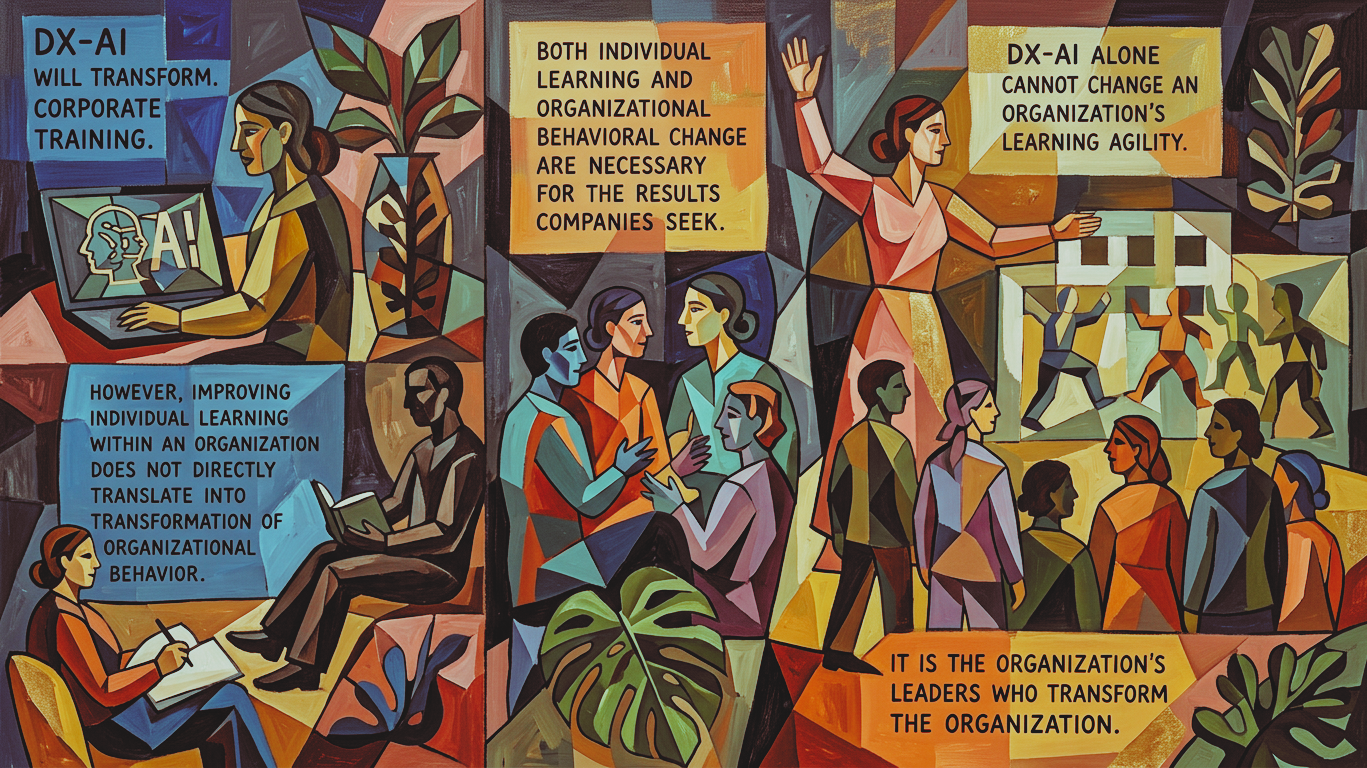
From Individual Learning to Organizational Learning Agility
In the first installment of ERR& Tips, published in November 2025 under the title “Why the Learning Budget Becomes the Scapegoat of Budget Cuts,” we introduced a hypothetical model explaining why the measurable impact of corporate training tends to decline rapidly over time.
We argued that sustaining the impact of training requires two conditions, in addition to the foundational knowledge each employee already holds.
The first is whether participants are prepared to accept, learn, and apply the training’s subject matter.
This is Employee Readiness.
The second is whether the organization has an environment in which individual learning can be incorporated into everyday behavior and decision-making.
This is Organizational Learning Agility.
Without these conditions, training may temporarily improve knowledge and skills, but its impact will rapidly decelerate over time.
In this ERR& Insight, we use that hypothetical model to consider how DX-AI may transform the role of Learning & Development.
AI is already making it possible to create more interactive learning and customize programs for individual participants.
But that alone does not transform L&D from a function that delivers knowledge to individuals into a mechanism for organizational learning.
To examine that possibility, we will use compliance training as an example of implementation.
Compliance training is relatively easy to deploy across an entire organization, yet it is also one of the forms of training in which achieving sustainable impact is most difficult.
Among the programs provided by HR, compliance training is probably one of the largest corporate learning investments when measured by the number of employees covered and the total time spent by participants.
Yet in terms of sustained impact, it may also be one of the forms of training from which companies can expect the least visible return.
Many companies provide mandatory compliance training to all employees every year.
Laws and company policies are explained.
Specific cases are presented.
A confirmation test is administered at the end.
Completion rates approach 100 percent.
Test pass rates are also high.
Yet compliance violations do not necessarily disappear.
There may be no precise data proving this relationship, but when participation rates are low, increasing participation probably contributes to some reduction in the number of violations.
However, once participation reaches a certain level, raising the completion rate by another percentage point does not necessarily reduce violations at the same rate.
Why?
Training can provide knowledge and decision-making criteria.
But if participants are not prepared to learn, and if the organization cannot convert what they learn into everyday behavior, the intended impact of the training will quickly decelerate.
Compliance training makes this problem particularly visible.
What makes compliance training especially serious is that a single incident may directly damage corporate value.
At the same time, compliance training is rarely something employees choose to attend voluntarily.
Its direct connection with business performance is also difficult to see.
Similar content is often repeated year after year.
For participants, completing the course can easily become more important than understanding the content and changing their behavior.
As a result, training becomes a mechanism for transmitting policies to individuals.
If every employee understands the law and company rules and behaves appropriately, then the organization—and ultimately the company itself—should remain compliant.
Many compliance programs are designed around this assumption.
But in real organizations, compliance violations do not occur only because individuals lack knowledge.
Actual behavior is influenced not only by what employees believe is right, but also by what managers tolerate, what behavior performance targets encourage, who responds when concerns are raised, and how people who challenge prevailing practices are treated.
Employees may understand the policy and still be unable to choose the right action inside the organization.
This means that beyond a certain point, increasing individual understanding alone produces diminishing returns.
What is needed next is not more training for individuals.
It is a mechanism that converts individual learning into organizational action.
From Individual Compliance to Organizational Compliance
In many manufacturing environments, this idea is already taken for granted.
Compliance with important standards is not entrusted solely to individual knowledge.
Through practices such as 5S, standard operating procedures, safety checks, stopping work when abnormalities occur, and managerial confirmation, systems for organizational compliance are embedded in daily operations.
In white-collar work, approval processes and internal controls may exist, but activities through which the organization collectively examines and learns from compliance-related judgment are not always embedded in everyday work.
In offices, decisions are made in meetings, emails, chats, one-to-one conversations, and interactions with customers.
The meaning of the same comment or behavior may change depending on position, relationships, repetition, authority, and context.
It is therefore impossible to define every correct action in advance through manuals.
What is needed is not a complete set of predetermined answers.
When should someone stop and reconsider?
Whom should they consult?
What behavior will the organization refuse to tolerate?
Who should act, and how, when a problem occurs?
These principles of judgment and action must be shared within the organization.
We believe this gap can be addressed by integrating DX-AI into the entire learning process, including digital learning.
AI does have the potential to transform compliance training.
However, if AI merely engages in one-to-one dialogue with employees and provides cases customized to each individual, it is only a more advanced form of conventional digital learning.
AI may deepen individual understanding.
But that alone does not enable the organization to learn.
This is where compliance training differs from skills or technical training.
Skills and technical training add new capabilities to individuals and organizations.
The outcome of compliance training, however, is not the creation of something new.
It is that nothing happens.
That is the ultimate result expected from the training.
This is precisely why completion rates and test results cannot demonstrate its true effectiveness.
From this perspective, AI-based individual learning alone is not enough.
AI-enabled learning must be combined with human-led organizational action learning.
A Hybrid Compliance Learning Model
Consider harassment prevention training.
The process would begin with an instructor-led session for organizational leaders.
The session would not simply explain the law and company policies.
It would also clarify what each leader must manage and what accountability they carry.
Next, the leader would explain the most important principles to team members during a team meeting.
There would be no need to communicate an excessive number of rules.
Three principles might be enough.
Do not ignore behavior that undermines another person’s dignity.
When something feels wrong, do not make the judgment alone—seek advice.
Do not disadvantage anyone who raises a concern or reports a problem.
The important point is that the policy is not communicated only by the company or HR.
The direct leader tells the team:
“These are the principles we will uphold in this organization.”
After that, all employees complete digital learning on the company policy.
However, this digital learning is not the main training program.
It is a prerequisite for the action-learning session that follows.
Participants join the team session after acquiring the necessary knowledge and a shared language.
This is where the AI instructor appears.
The AI instructor presents a case to the organizational leader and asks for a judgment.
When the leader responds, the AI adds new conditions, asks for the reasoning behind the answer, and introduces alternative perspectives.
Team members observe the exchange.
The objective is not for the leader to demonstrate the correct answer.
The objective is to show the process of judgment.
Where does the leader sense that something may be wrong?
What information does the leader confirm?
When does the leader intervene?
Whom does the leader consult?
Team members observe how these judgments are made.
After the dialogue, the leader becomes the facilitator of the team activity.
The team discusses where problems are most likely to arise in its own workplace.
What behavior will the team refuse to tolerate?
Who will respond, and how, when a problem occurs?
What will the team change from tomorrow?
Each team develops a specific action program.
The team then submits its conclusions to the AI.
The AI provides feedback on alignment with company policy, overlooked risks, and the sufficiency of the proposed actions.
However, harassment training must also recognize that the organizational leader may be part of the problem.
The company therefore needs anonymous reporting channels and direct routes to HR or the compliance function that do not require employees to go through their manager.
The role of AI should also be limited.
AI may review whether a team action program is aligned with company policy.
It should not assess an employee’s personality, emotions, or likelihood of committing harassment.
Nor should it determine the facts of an actual complaint.
Finally, each participant completes an individual test to confirm participation and understanding.
Passing the test demonstrates Individual Completion.
The action program developed by the team demonstrates Organizational Implementation.
These are not the same thing.
Knowledge acquired by individuals through training has been elevated, through team dialogue, into an organizational action plan.
What might such a program look like in practice?
Let us examine a fictional case involving Solveris Electronics.
The Case: Solveris Tests an AI Instructor
Ian Scholes, Chief Information Officer of Solveris Electronics, had received a request from CEO John Smith.
Could Solveris optimize the time and cost of Learning & Development by applying AI?
Ian began developing a new learning program using generative AI.
He believed that combining an avatar-based AI instructor with the existing digital learning platform would make training more interactive and customizable for each participant.
For the first pilot, he selected mandatory compliance training provided by HR to all employees.
The AI instructor he developed could refer to Solveris policies, present cases, change its questions in response to the participant’s answers, and provide feedback in multiple languages.
Solveris would not need to send specialist instructors to every country.
The program could also provide different cases to different participants.
After completing the first prototype test, Ian sent an invitation to HR Director Liza Stone.
Liza, As you may already have heard, I have been developing a pilot program to introduce DX-AI into Learning & Development. The first prototype is ready. I would like you to attend a demonstration and give me your feedback.
After sending the invitation, Ian thought to himself:
Liza will be surprised.
She will probably be pleased as well.
Ian arrived at Liza’s office on time.
As soon as he entered the room, Liza asked with visible curiosity:
“So, what exactly have you built?”
“We only renewed the employee digital learning platform recently.”
“John asked me to begin wherever we could.”
Liza sighed.
“This is about the training budget, isn’t it?”
As HR Director, Liza regarded learning expenditure as an investment in the organization’s future.
Whenever budget reductions were proposed, she repeatedly argued with John and CFO Douglas Logan.
“Partly,” Ian replied.
“But I think you will find this more interesting than our usual cost-cutting proposals.”
Ian connected his computer to the monitor in Liza’s office.
“I built a prototype based on our mandatory compliance training.”
“It supports multilingual voice interaction. The AI changes its next question depending on the participant’s response.”
“It presents cases, asks follow-up questions, and continues to provide feedback throughout the program.”
“I think it is far more interactive than our current digital learning.”
Liza looked at the screen.
“Did you build this yourself?”
“The basic structure, yes.”
Ian smiled.
“Of course, we have several excellent programmers.”
“How many people do you need for the pilot?”
“Two or three should be enough. Today, I wanted to show you the prototype first.”
“I would like to participate as well,” Liza said.
Ian started the program.
An AI instructor appeared on the screen and introduced a harassment case involving a high-performing manager, a junior employee, and comments repeatedly made during informal team meetings.
The AI first asked the participant to identify the risk.
It then changed the conditions.
What if the employee had not made a formal complaint?
What if the comments had been described as harmless jokes?
What if the manager was delivering exceptional business results?
What if other team members said that they had not felt uncomfortable?
Each time the participant answered, the AI asked another question.
Why did you make that judgment?
What does the Solveris policy say?
How might the situation appear from another person’s perspective?
It was clear that the program was far more interactive than the existing digital learning.
Ian closed the screen.
“It needs one more round of development before user acceptance testing.”
“Give me another week.”
Liza nodded.
“It is impressive.”
“Let us test it properly.”
The Pilot Program
One week later, Liza selected several members of the HR function and conducted a pilot.
Each participant completed the AI-based training individually.
The results appeared positive.
Participants said the program held their attention more effectively than the existing digital learning.
They appreciated being able to ask the AI questions.
They found the cases realistic.
The AI changed its questions in response to their answers.
Scores on the final test were also higher than those achieved under the previous program.
Ian reviewed the results and looked satisfied.
“The prototype works.”
“It is more interactive, supports multiple languages, and could be deployed globally.”
“I think we can also reduce the cost of external instructors.”
Liza did not disagree.
But she was not comfortable concluding that the training had succeeded based on those results alone.
The participants’ understanding had improved.
But what had remained within the organization?
Liza later gathered the participants in a meeting room.
She asked them one question.
“After completing the training, what will we change as an HR organization from tomorrow?”
One participant said they would be more careful about the comments they make in informal settings.
Another said they now understood the Solveris harassment policy more clearly.
A third participant explained when a case should be escalated to a higher level.
None of the answers was wrong.
But no one answered what HR, as an organization, would change.
The team had not discussed what behavior it would refuse to tolerate.
It had not clarified who would respond, or how, if a concern were raised within the team.
It had not identified risks specific to its own workplace.
No organizational action had been agreed.
The AI training program had worked.
As a result, the individual participants had learned.
But the organization had not.
After the meeting, Liza visited Ian’s office.
“The program is good,” she said.
“It is clearly better than our current digital learning.”
Ian smiled.
“I thought you would say that.”
“For skills training, this might be enough,” Liza continued, cutting him off.
“But it is still training individuals one by one.”
“For compliance training, that is not enough.”
Ian paused.
“What is missing?”
“The organization.”
Liza placed the pilot report on the table.
“The participants understood the policy.”
“They answered the questions.”
“They passed the test.”
“But HR did not decide what it would change.”
“AI improved individual learning.”
“But the organization did not learn anything.”
Liza Redesigns the Learning Program
Liza did not ask Ian to stop developing the AI instructor.
Instead, she proposed redesigning the entire learning program around it.
She opened the laptop she had brought with her and projected a document onto the screen in Ian’s office.
It showed the full architecture of a new compliance learning program.
The first stage would be training for organizational leaders.
Each leader would learn not only the company policy, but also the accountability they carried for maintaining a safe and respectful workplace.
The next stage would take place within each team.
The leader would explain a small number of important principles that every team member was expected to follow.
The existing digital learning would come next.
However, it would no longer be positioned as the complete compliance program.
It would serve as a prerequisite for the next stage.
The team would then participate in AI-enabled action learning.
The AI instructor would present a case and engage in a dialogue with the organizational leader.
Team members would observe the exchange.
They would not merely see the correct answer.
They would see how the leader noticed a risk.
What information the leader confirmed.
How different perspectives were considered.
When the leader decided to intervene.
When the leader consulted a higher level or a specialist function.
They would observe the decision-making process itself.
After the dialogue with the AI, the organizational leader would facilitate a team activity.
The team would discuss the risks present in its own workplace.
It would decide what behavior it would refuse to tolerate.
It would clarify what employees should do when they noticed a problem.
It would then agree on a concrete action program.
The team would submit its conclusions to the AI instructor.
The AI would review the action program against Solveris policies.
Had any risks been overlooked?
Were responsibilities unclear?
Were the proposed actions too abstract to implement?
The AI would provide feedback on these points.
Finally, every participant would complete an individual test as evidence of attendance and understanding.
Ian listened carefully to Liza’s explanation.
“I see. So the AI would not be responsible for the entire learning program.”
“No,” Liza replied.
“AI provides expert knowledge at scale.”
“But accountability for the team remains with the organizational leader.”
“And the team must convert what it learns into organizational action.”
Ian looked again at the pilot results.
“IT built the AI instructor.”
“Yes. It is an excellent success,” Liza replied.
“HR will elevate it into an organizational learning system.”
From Training Data to Organizational Learning
The redesigned program would generate two different types of outcomes.
The final test would confirm that individuals had completed the program and understood the required knowledge.
The team action program would confirm that the learning had been implemented within the organization.
But the model could go further.
If the conclusions submitted by each team were anonymized and aggregated, Solveris could identify common organizational risks.
If many teams did not understand where concerns should be reported, the problem would not simply be insufficient employee knowledge.
The reporting and consultation process itself might be unclear.
If many organizational leaders struggled with cases involving high-performing employees or managers, the problem might lie in management expectations or the performance management system.
If employees understood the policy but believed that raising a concern would damage their careers, the issue would be organizational trust.
The AI instructor would therefore become more than a tool for delivering training.
It would help identify where individual understanding was failing to become organizational behavior.
The findings could then be used to revise policies, managerial practices, workflows, reporting channels, performance systems, and future training cases.
The organization would not merely provide training.
It would learn from the training.
What Compliance Training Reveals About the Future of L&D
Ian and Liza presented their jointly designed compliance learning program to the Solveris executive committee.
“Très bien.”
CEO John Smith used the expression he always relied on when acknowledging a strong proposal.
“So, AI does not simply deepen individual understanding. It converts that understanding into organizational action.”
“Embedding compliance in an organization is difficult. But this may offer us one direction.”
John looked again at the new learning process projected on the screen.
AI can make learning more interactive.
It can adapt cases to individual participants.
It can ask follow-up questions.
It can deliver specialist knowledge across different countries and languages.
In the near future, organizations may be able to provide AI-enabled action learning to teams around the world at a scale that would be impossible with human instructors alone.
But making learning interactive does not automatically change the organization.
To sustain learning impact, employees must be ready to learn.
Organizational leaders must translate company principles into team expectations.
Teams must convert learning into concrete action.
And the organization must be capable of learning from the conclusions generated in each workplace.
AI can provide expert knowledge at scale.
Organizational leaders can convert that knowledge into team action.
HR can use technology to design the learning architecture that connects the two.
This idea is not limited to compliance training.
The real potential of AI to transform L&D is not simply its ability to deliver learning to individuals.
It is its ability to help connect individual learning with organizational behavior and organizational learning.
What Solveris demonstrated was not merely the future of compliance training.
The transformation of L&D through AI is not simply the advancement of individual learning.
It is the implementation of AI-enabled organizational action learning.(Originally posted on LinkedIn on 2026-07-26)
About Errand Consulting
Errand Consulting explores organizational transformation
through the ERR& Philosophy.
Learn more → www.hrfd3.com
AIはL&Dをどのように変えるのか?
個人学習から組織の学習機敏性へ
私たちは企業研修について、2025年11月に投稿した初回のERR& Tips 「なぜ教育研修費は予算削減のスケープゴートになるのか」 の中で、企業研修の定量的な効果は時間の経過とともに急速に低下していくという現実と、その主な要因について、仮説モデルを用いて解説した。
その中で、研修効果を持続させるためには、個人がすでに持っている基礎知識に加えて、二つの条件が必要であると述べた。
一つは、受講者がその研修のテーマや内容を受け入れ、学び、実行する準備ができていること。
従業員の学習準備度である。
もう一つは、研修から得られた個人の学びを、組織が日常の行動や意思決定に取り込み、活用できる環境を持っていること。
組織の学習機敏性である。
これらの条件が整っていなければ、研修によって一時的に知識やスキルが向上しても、その効果は時間の経過とともに急速に減速していく。
今回は、この仮説モデルをもとに、DX-AIがL&Dの役割をどのように変える可能性があるのかを考えてみたい。
AIによって研修をインタラクティブにし、受講者ごとに最適化することは、すでに現実になりつつある。
しかし、それだけでL&Dが、個人への知識提供から組織学習へ変わるわけではない。
そこで今回は、その可能性を検討するために、比較的全社展開しやすい一方で、効果の持続が最も難しい研修の一つであるコンプライアンス研修を例として取り上げる。
人事部門が提供する研修の中でも、コンプライアンス研修は、提供対象となる従業員の範囲と研修に使われる総時間を考えると、企業が最も多くの時間を費やしている研修の一つである。
しかし、効果の持続という点では、コンプライアンス研修は、企業が実施する研修の中でも最も成果を期待しにくいものの一つかもしれない。
多くの企業では、毎年、全従業員を対象としたコンプライアンス研修を実施している。
法令や社内ポリシーを説明する。
具体的な事例を示す。
最後に確認テストを行う。
受講率は、ほぼ100%に達する。
テストの合格率も高い。
しかし、それによってコンプライアンス違反がなくなるとは限らない。
厳密な測定データがあるわけではないが、受講率が低い段階では、受講率の向上に伴って違反件数も一定程度減少すると考えられる。
しかし、受講率が一定水準を超えると、受講率をさらに1ポイント引き上げても、違反件数は同じ割合では減少しなくなるのではないだろうか。
なぜだろうか。
研修によって、知識や判断基準を与えることはできる。
しかし、受講者に学ぶ準備がなく、学んだ内容を組織が日常の行動へ転換できなければ、本来期待されている研修効果は急速に減速する。
コンプライアンス研修は、この問題が最も表れやすい。
そして、コンプライアンス研修の恐ろしいところは、たった一つのインシデントが、企業価値そのものの毀損に直接つながる可能性があることである。
しかし、コンプライアンス研修は、多くの場合、本人が自ら選んで参加する研修ではない。
業績向上との直接的な関係も見えにくい。
毎年、似たような内容が繰り返される。
受講者にとっては、内容を理解し、行動を変えることよりも、受講を完了すること自体が目的になりやすい。
その結果、研修は個人にポリシーを伝達する仕組みになる。
一人ひとりが法令と会社のルールを理解し、正しく行動すれば、組織全体も、ひいては企業そのものもコンプライアンスを遵守できる。
多くの研修は、この前提に立って設計されている。
しかし、実際の組織では、コンプライアンス違反は個人の知識不足だけによって起きるわけではない。
社員が何を正しいと考えるかだけでなく、上司が何を許容するか、業績目標がどのような行動を促すか、問題を相談したときに誰が対応するか、異議を唱えた人がどのように扱われるかによって、実際の行動は変わる。
社員がポリシーを理解していても、組織の中で正しい行動を選べないことがある。
つまり、個人の理解度を高めるだけでは、一定水準を超えたところから研修効果は減速する。
その先に必要なのは、個人に対する追加研修ではない。
個人の学習を、組織の行動へ転換する仕組みである。
個人のコンプライアンスから組織のコンプライアンスへ
このことは、多くの生産現場では、ごく当たり前の考え方になっている。
守るべきことを、個人の知識だけに委ねない。
5S、標準作業、安全確認、異常時の停止、管理者による確認などを通じて、組織として守る仕組みが日常業務の中に組み込まれている。
一方、ホワイトカラーの仕事では、承認手続きや内部統制は存在していても、コンプライアンス上の判断を組織全体で確認し、学習する活動が、日常業務の中に十分組み込まれているとは限らない。
オフィスでは、会議、メール、チャット、1対1の面談、顧客との会話など、さまざまな場面で判断が行われる。
同じ発言や行動であっても、立場、関係性、継続性、権限、背景によって意味が変わる。
そのため、すべての行動をマニュアル化することはできない。
必要なのは、すべての正解をあらかじめ決めることではない。
いつ立ち止まるのか。
誰に相談するのか。
どのような行動を組織として許容しないのか。
問題が起きたときに、誰が何をするのか。
このような判断と行動の原則を、組織の中で共有することである。
私たちは、オンライン学習を含む研修プロセス全体にDX-AIを組み込むことによって、このギャップを埋められるのではないかという仮説を持っている。
実際にAIは、コンプライアンス研修を大きく変える可能性を持つ。
ただし、AIと従業員が一対一で対話し、個人に合わせたケースを提供するだけでは、従来のオンライン学習を高度化したにすぎない。
AIが個人の理解を深めても、それだけでは組織は学習しない。
ここが、スキル研修や技能研修と異なるところである。
スキル研修や技能研修は、個人と組織に新しい能力を足し算する研修である。
一方、コンプライアンス研修の成果は、何かが新しく生み出されることではない。
何も起こらないこと。
それが、研修に期待されている最終的な結果である。
だからこそ、受講率やテスト結果だけでは、研修の本当の効果を確認することが難しい。
この点から考えると、必要なのはAIによる個人学習だけではない。
AIによる学習と、人が行う組織的なアクションラーニングを組み合わせることである。
ハイブリッド型コンプライアンス研修モデル
例えば、ハラスメント研修を考えてみよう。
最初に、各組織長に対して集合研修を行う。
そこでは、法令や会社のポリシーを説明するだけでなく、組織長として何を管理し、何に責任を持つのかを確認する。
次に、組織長はチームミーティングで、組織として守るべき最も重要な原則をメンバーに伝える。
説明する内容は、多くする必要はない。
例えば、三つの原則でよい。
相手の尊厳を損なう行動を放置しない。
違和感を覚えた場合には、一人で判断せず相談する。
相談や問題提起をした人に不利益を与えない。
ここで重要なのは、会社や人事部門がポリシーを伝えるだけでなく、直属の組織長が、
「この組織では、これを守る」
とメンバーに伝えることである。
その後、全員が会社のポリシーに関するオンライン学習を受講する。
しかし、このオンライン学習は研修の本体ではない。
その後に行われるアクションラーニングに参加するための事前研修である。
参加者は、必要な知識と共通言語を身につけた上で、チーム単位の研修に参加する。
ここで、AI講師が登場する。
AI講師は、組織長に対してケースを提示し、判断を求める。
組織長が回答すると、AIは条件を追加し、理由を尋ね、別の視点を提示する。
メンバーは、そのやり取りを視聴する。
重要なのは、組織長が正解を見せることではない。
どこに違和感を持つのか。
何を確認するのか。
いつ介入するのか。
誰に相談するのか。
その判断の過程を、メンバーの前で示すことである。
その後、組織長がファシリテーターとなり、チームで活動を行う。
自分たちの職場では、どのような状況で問題が起こりやすいのか。
何を組織として許容しないのか。
問題が起きた場合に、誰がどのように対応するのか。
明日から、何を変えるのか。
各チームは、具体的なアクションプログラムを作成する。
その結果をAIに報告し、AIは会社のポリシーとの整合性、見落としているリスク、アクションの具体性についてフィードバックを返す。
ただし、ハラスメント研修では、組織長自身が問題の当事者である可能性も考慮しなければならない。
そのため、チーム活動とは別に、組織長を経由せずに相談できる匿名の報告経路や、人事・コンプライアンス部門への直接的な相談経路を確保する必要がある。
また、AIが行うのは、チームのアクションプログラムと会社のポリシーとの整合性を確認することまでである。
AIが個人の性格、感情、ハラスメントリスクを評価したり、実際の申し立てについて事実認定を行ったりするものではない。
最後に、個人の受講完了を確認するためのテストを実施する。
ここで、テストの合格は、個人が受講を完了したことを示す。
一方、チームが策定したアクションプログラムは、学習内容が組織に実装されたことを示す。
この二つは同じではない。
研修によって得られた個人の知識が、チームの対話を通じて、組織の行動計画へと昇華したことになる。
では、このような研修は、実際にはどのような形になるのだろうか。
ここで、架空の企業ソルベリス・エレクトロニクスのケースを用いて考えてみよう。
ケーススタディ:ソルベリス、AI講師を試す
ソルベリス・エレクトロニクスの最高情報責任者、イアン・スコールズは、最高経営責任者のジョン・スミスから一つの依頼を受けていた。
人材育成にAIを活用することで、教育研修にかかる時間とコストを最適化できないか。
イアンは、生成AIを利用した新しい研修プログラムの試作を始めた。
彼は、既存のオンライン学習をベースに、アバター型のAI講師を組み合わせることで、よりインタラクティブで、受講者ごとにカスタマイズ可能な研修を実現できると考えた。
そして、その第一弾として選んだのが、人事部門が提供する全従業員必須のコンプライアンス研修だった。
彼の作ったAI講師は、ソルベリスのポリシーを参照しながらケースを提示し、受講者の回答に応じて質問を変え、複数の言語でフィードバックを返すことができた。
専門講師を各国へ派遣する必要もない。
受講者ごとに異なるケースを提示することもできる。
プロトタイプのテストを終えると、イアンは人事部長のライザ・ストーンのカレンダーに招待を送った。
ライザへ すでに聞いているかもしれないが、私は現在、人材育成へのDX-AI導入に向けた試験プログラムを作っている。最初のプロトタイプが完成した。デモに参加して、意見を聞かせてほしい。
招待を送った後、イアンは思った。
ライザはきっと驚く。
そして、おそらく喜ぶだろう。
当日、イアンは定刻にライザのオフィスを訪ねた。
ライザは、イアンが部屋に入るなり、興味深そうに尋ねた。
「それで、いったい何を作ったの?」
「社員研修のオンライン学習システムは、ついこの間、一新したばかりでしょう」
「ジョンから、できるところから始めてほしいと言われたんだ」
ライザはため息をついた。
「研修予算の話でしょう?」
人事部長として、ライザは教育研修費を組織の未来に対する投資だと考えていた。
そのため、予算削減の話が出るたびに、ジョンや最高財務責任者のダグラス・ローガンと議論を繰り返していた。
「一部はそうだ」
イアンは答えた。
「でも、いつものコスト削減案よりは、君も興味を持つと思うよ」
イアンは、ライザの部屋のモニターに自分のパソコンを接続した。
「必須のコンプライアンス研修をベースにしたプロトタイプを作った」
「複数言語の音声対話に対応している。参加者の回答によって、AIが次の質問を変える」
「ケースを提示し、追加質問を行い、その後も継続してフィードバックする」
「現在のオンライン学習より、かなりインタラクティブになっていると思う」
ライザは画面を見ながら尋ねた。
「これを、あなたが自分で作ったの?」
「基本構造はね」
イアンは笑った。
「もちろん、うちには優秀なプログラマーが何人かいる」
「パイロットには何人必要かしら?」
「二、三人で十分だと思う。今日は、まず君にプロトタイプを見せたかった」
「私も参加したいわ」
ライザは言った。
イアンはプログラムを起動した。
画面上にAI講師が現れ、高い業績を上げている管理職、若手社員、そして非公式なチームミーティングで繰り返される発言を題材にしたハラスメントのケースを説明した。
AIはまず、参加者に何がリスクなのかを特定するよう求めた。
その後、条件を変えていった。
社員本人が正式な申告をしていなかったとしたら、どう判断するか。
問題となった発言が、単なる冗談だったと説明されたらどうするか。
その管理職が、非常に高い業績を上げていたらどうするか。
他のチームメンバーが、自分たちは不快に感じていないと話したらどうするか。
参加者が回答するたびに、AIは次の質問を投げかけた。
なぜ、そのように判断したのか。
ソルベリスのポリシーでは、どのように定められているのか。
別の立場から見た場合、その状況はどのように見えるのか。
このプログラムが、既存のオンライン学習よりもはるかにインタラクティブであることは明らかだった。
イアンは画面を閉じた。
「利用者受入テストまでには、もう一段作り込む必要がある」
「あと一週間、時間をもらいたい」
ライザはうなずいた。
「素晴らしいと思うわ」
「きちんとテストしてみましょう」
パイロット研修
一週間後、ライザは人事部門から数名のメンバーを選び、パイロット研修を実施した。
参加者は、それぞれ個別にAI研修を受講した。
結果は良好に見えた。
参加者は、既存のオンライン学習よりも興味を持って受講できたと答えた。
AIに質問できる点も評価された。
ケースも現実的だと感じていた。
AIは参加者の回答に応じて質問を変えた。
最後に行われたテストの点数も、従来のプログラムより高かった。
結果を確認したイアンは、満足そうだった。
「プロトタイプは機能している」
「従来よりインタラクティブで、複数言語にも対応できる。世界中に展開することも可能だ」
「外部講師にかかるコストも減らせると思う」
ライザも、その点に異論はなかった。
しかし、この結果だけで研修が成功したと結論づけることには、違和感を持っていた。
参加者の理解度は上がっている。
では、組織には何が残ったのだろうか。
ライザは後日、参加者を会議室に集めた。
そして、一つの質問をした。
「先日の研修を受けたことで、私たちは人事部門として、明日から何を変えるのかしら?」
ある参加者は、非公式な場での発言に、これまで以上に注意すると答えた。
別の参加者は、ソルベリスのハラスメントポリシーを以前より明確に理解できたと答えた。
別の参加者は、どのような場合に問題を上位者へ報告すべきかを説明した。
どの回答も、間違いではなかった。
しかし、人事部門が組織として何を変えるのかについて答えた者はいなかった。
人事チームとして、どのような行動を許容しないのかは話し合われていなかった。
チーム内で問題が提起された場合に、誰がどのように対応するのかも明確になっていなかった。
自分たちの職場に固有のリスクも特定されていなかった。
組織としてのアクションは、何も合意されていなかった。
AI研修プログラムは機能していた。
その結果として、参加者個人は学習していた。
しかし、組織は学習していなかったのだ。
会議の後、ライザはイアンのオフィスを訪ねた。
「先日のプログラムは良いと思う」
ライザは言った。
「現在のオンライン学習よりも、明らかに優れているわ」
イアンは笑った。
「そう言ってくれると思っていたよ」
「技能研修なら、これで十分かもしれないわ」
ライザは、イアンの言葉を遮るように続けた。
「でも、これはまだ、一人ひとりに対して研修をしているだけなの」
「コンプライアンス研修としては、十分ではないわ」
イアンは少し黙った。
「何が足りないんだ?」
「組織よ」
ライザはパイロット研修の報告書をテーブルに置いた。
「参加者はポリシーを理解した」
「質問にも答えた」
「テストにも合格した」
「でも、人事部門として何を変えるのかは、何も決まらなかった」
「AIは、個人の学習を改善した」
「でも、組織は何も学習していない」
ライザによる研修プログラムの再設計
ライザは、イアンにAI講師の開発を止めるよう求めたわけではなかった。
その代わりに、AI講師を組み込んだ研修プログラム全体を再設計することを提案した。
彼女は持参したパソコンを開き、イアンのオフィスのスクリーンに資料を投影した。
そこには、彼女が考案した新しいコンプライアンス研修の全体像が示されていた。
最初に行うのは、組織長向けの研修である。
各組織長は、会社のポリシーを理解するだけでなく、安全で尊重される職場を維持するために、自分がどのような責任を負っているのかを学ぶ。
次の段階は、各チームの中で行う。
組織長は、すべてのメンバーが守るべき少数の重要な原則を説明する。
その次に行うのが、既存のオンライン学習である。
ただし、それはコンプライアンス研修全体ではない。
次の段階に進むための事前研修として位置づける。
その次に、AIを活用したアクションラーニングを実施する。
AI講師がケースを提示し、組織長と対話する。
チームメンバーは、そのやり取りを視聴する。
メンバーが見るのは、単なる正解ではない。
組織長がどのようにリスクに気づくのか。
何を確認するのか。
異なる立場をどのように考慮するのか。
いつ介入し、いつ上位者や専門部門に相談するのか。
その判断の過程を見るのである。
AIとの対話が終わった後、組織長はチーム活動のファシリテーターを務める。
チームは、自分たちの職場にどのようなリスクがあるのかを話し合う。
どのような行動を許容しないのかを決める。
問題に気づいたときに、メンバーが何をするべきかを明確にする。
そして、具体的なアクションプログラムを合意する。
チームは、その結論をAI講師へ提出する。
AIは、ソルベリスのポリシーと照らし合わせてアクションプログラムを確認する。
見落とされているリスクがないか。
責任の所在が曖昧になっていないか。
具体的に実行できないほど抽象的な内容になっていないか。
AIは、これらの点についてフィードバックを返す。
最後に、すべての参加者が、出席と理解の証明として個人テストを受ける。
イアンは、ライザの説明を注意深く聞いた。
「なるほど。つまり、AIが研修プログラムのすべてを担当するわけではないんだね」
「そうよ」
ライザは答えた。
「AIは、専門知識を大規模に提供する」
「でも、チームに対する責任を持つのは、あくまで組織長よ」
「そしてチームは、学んだことを組織の行動に変えなければならない」
イアンは、もう一度パイロット研修の結果に目を落とした。
「ITは、AI講師を作った」
「そうね。すばらしい成功よ」
ライザは答えた。
「人事は、それを組織学習のシステムへ昇華させるわ」
研修データから組織学習へ
再設計されたプログラムは、二種類の異なる結果を生み出す。
最後のテストは、個人が研修を完了し、必要な知識を理解したことを確認する。
チームのアクションプログラムは、学習内容が組織に実装されたことを確認する。
しかし、このモデルは、さらに先へ進むことができる。
各チームが提出した結論を匿名化して集約すれば、ソルベリスは、組織に共通するリスクを特定できる。
多くのチームが、問題をどこに報告すればよいか理解していないのであれば、それは単に従業員の知識が不足しているということではない。
報告や相談のプロセスそのものが分かりにくい可能性がある。
高い業績を上げている社員や管理職が関係するケースについて、多くの組織長が判断に迷うのであれば、問題は経営からの期待や評価制度にあるのかもしれない。
社員がポリシーを理解していても、問題を提起すれば自分のキャリアに悪影響が出ると考えているのであれば、それは組織の信頼に関する問題である。
したがって、AI講師は、単なる研修提供のための道具ではなくなる。
個人の理解が、どこで組織の行動に転換されていないのかを特定する手段になる。
そこで得られた結果を、ポリシー、管理職の行動、業務プロセス、相談経路、評価制度、そして次回の研修ケースの見直しに活用することができる。
組織は、単に研修を提供するだけではない。
研修から学習することができる。
コンプライアンス研修が示すL&Dの未来
イアンとライザが共同で設計した、新しいコンプライアンス研修のデモが、経営会議で行われた。
「トレビアン」
最高経営責任者のジョン・スミスは、良い提案を聞いたときに決まって口にする言葉で、二人をねぎらった。
「AIで個人の理解を深めるだけでなく、それを組織の行動へ変えるのか」
「コンプライアンスを組織に根づかせることは難しい。しかし、これは一つの方向性になるだろう」
ジョンは、スクリーンに映し出された新しい研修プロセスを、もう一度見つめた。
AIは、研修をよりインタラクティブなものに変えることができる。
参加者に応じてケースを変えることができる。
追加質問を行うことができる。
異なる国や言語に、専門知識を提供することができる。
近い将来、人間の講師だけでは実現できなかった規模で、AIに支援されたアクションラーニングを、世界中のチームに提供できるようになるかもしれない。
しかし、研修がインタラクティブになったからといって、自動的に組織が変わるわけではない。
研修効果を持続させるためには、従業員が学ぶ準備を整えていなければならない。
組織長は、会社の原則をチームの行動基準へ変換しなければならない。
チームは、学んだことを具体的な行動へ変えなければならない。
そして組織は、それぞれの職場で生まれた結論から学習できなければならない。
AIは、専門知識を大規模に提供することができる。
組織長は、その知識をチームの行動へ変えることができる。
そして人事は、テクノロジーを活用しながら、その二つを接続する研修アーキテクチャを設計する。
この考え方は、コンプライアンス研修に限らない。
AIがL&Dを変える本当の可能性は、個人に学習を提供することだけではなく、個人の学びを組織の行動と学習へ接続することにある。
ソルベリスが示したのは、コンプライアンス研修の未来だけではない。
AIによるL&Dの変革とは、個人学習の高度化ではなく、AIに支援された組織的なアクションラーニングの実装なのである。(Originally posted on LinkedIn on 2026-07-26)
About Errand Consulting
Errand Consulting explores organizational transformation
through the ERR& Philosophy.
Learn more → www.jp.hrfd3.com
- From Individual Learning to Organizational Learning Agility
- From Individual Compliance to Organizational Compliance
- A Hybrid Compliance Learning Model
- The Case: Solveris Tests an AI Instructor
- The Pilot Program
- Liza Redesigns the Learning Program
- From Training Data to Organizational Learning
- What Compliance Training Reveals About the Future of L&D
- AIはL&Dをどのように変えるのか?
- 個人学習から組織の学習機敏性へ
- 個人のコンプライアンスから組織のコンプライアンスへ
- ハイブリッド型コンプライアンス研修モデル
- ケーススタディ:ソルベリス、AI講師を試す
- パイロット研修
- ライザによる研修プログラムの再設計
- 研修データから組織学習へ
- コンプライアンス研修が示すL&Dの未来


コメント